
When your four-year-old melts down in the cereal aisle or your nine-year-old slams a door after a bad day at school, the reflex is often the same: teach them to calm themselves down. But self-regulation—the ability to manage big emotions independently—doesn’t develop in a vacuum. It grows from years of co-regulation, the process by which a calm adult helps a dysregulated child return to baseline. Understanding the distinction between co-regulation vs self-regulation changes not only how you respond in the moment, but how you think about your role across your child’s entire emotional development. This isn’t about perfection; it’s about recognizing which mode your child needs right now, and why that need will shift as they grow.
The difference matters because treating every meltdown as a teachable moment for self-regulation can backfire when what your child actually needs is your regulated nervous system to borrow from. Our child development hub explores the developmental arc of emotional skills in depth, but this article zeroes in on the core distinction between co-regulation vs self-regulation: what each looks like in real life, why co-regulation is the foundation, and how to know which your child needs in any given moment.
The Scaffolding Model of Emotional Regulation
Key Insight: Self-regulation is not innate—it’s an internalized version of co-regulation experiences accumulated over thousands of interactions.
Think of co-regulation as the scaffolding around a building under construction. Early on, the scaffolding does most of the structural work. As the building’s frame strengthens, the scaffolding is gradually removed. If you remove it too early, the structure collapses. If you leave it too long, the building never learns to hold its own weight. Teaching self-regulation to kids works the same way: the internalized voice that says “take a breath” or “this feeling will pass” was once your external voice, repeated hundreds of times during moments of distress. When parents misunderstand co-regulation vs self-regulation and push for independence too soon, children lack the neural wiring to manage emotions alone.
- Expecting a toddler to “use your words” when they’re in full fight-or-flight mode
- Telling a six-year-old to “go calm down in your room” before they’ve learned what calming down feels like
- Assuming your preteen should be able to self-soothe after a social rejection without first walking through what that process looks like
- Labeling normal developmental needs for co-regulation as “too dependent” or “manipulative”
The scaffolding stays up as long as the child needs it, and comes down in pieces—not all at once.
What Co-Regulation Actually Looks Like in Practice

Co-regulation isn’t a technique you deploy; it’s a physiological process. When your child is overwhelmed, their nervous system is in a state of hyperarousal or shutdown. Child Mind Institute defines co-regulation as the interactive process through which a caregiver provides emotional and physiological support to help a child regain equilibrium. Your calm presence—steady voice, slow breathing, physical proximity—sends safety signals that help their nervous system downshift. This is not about talking them out of their feelings or offering solutions. It’s about being a regulated anchor.
In real life, co-regulation looks like sitting with your toddler during a tantrum without lecturing, using a low and slow voice while your seven-year-old sobs about a playground conflict, or staying in the room while your teenager stares at the ceiling in silence after a hard day. It’s the how of your presence, not the what of your words. Co-regulation for parents means managing your own activation first—taking a breath before you respond, noticing the tension in your shoulders, resisting the urge to fix or minimize. The effectiveness of co-regulation vs self-regulation in early childhood is that co-regulation works right now; self-regulation is something you’re building toward, but it cannot be rushed.
The quality of co-regulation matters more than the duration. A two-minute interaction where you’re genuinely calm and present is more regulating than twenty minutes of anxious hovering. When you’re in your own fight-or-flight, your child’s nervous system picks up on that, and the dysregulation escalates. This is why understanding your own nervous system signals is not a luxury—it’s the foundation of effective co-regulation.
When Self-Regulation Becomes Developmentally Possible
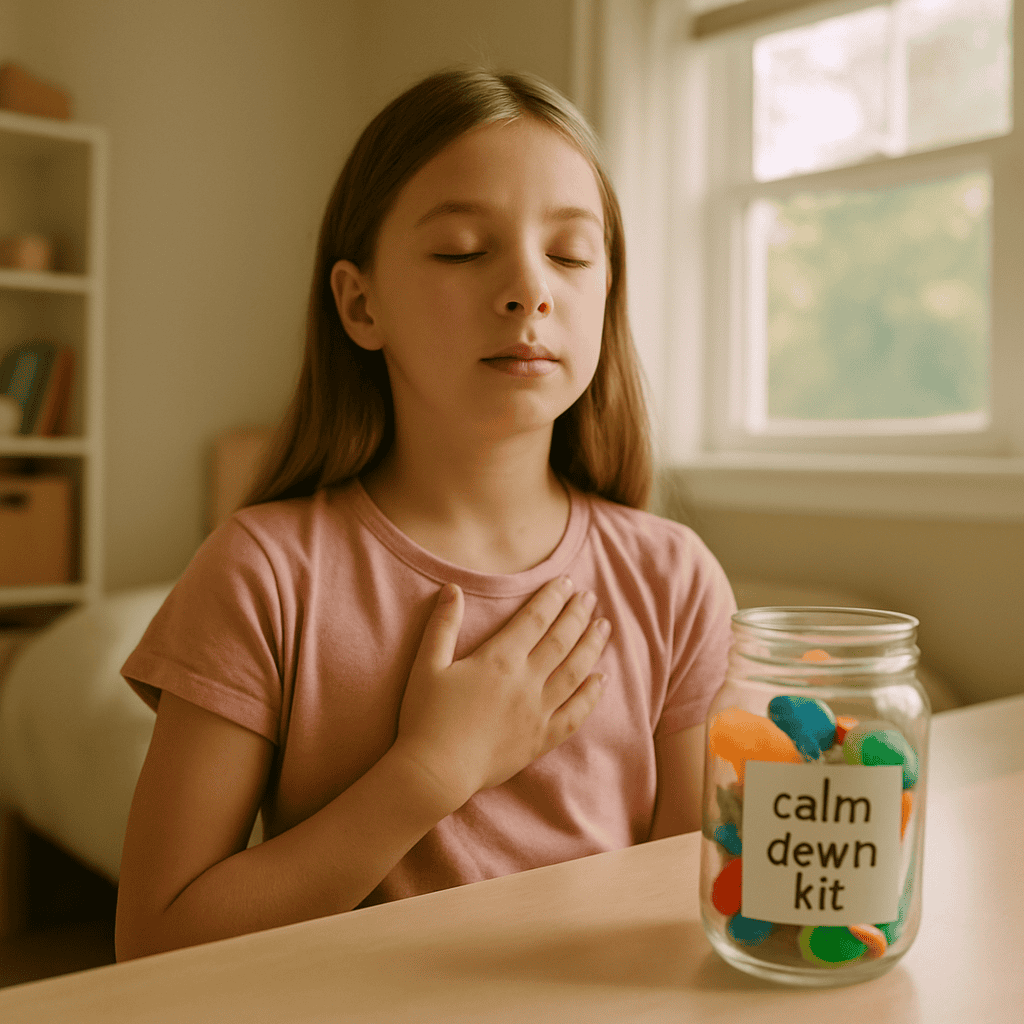
Self-regulation is the ability to notice your emotional state, tolerate distress, and use internal or external strategies to return to baseline—without needing another person’s nervous system to do the heavy lifting. It’s a gradual developmental achievement, not a light switch. Teaching self-regulation to kids starts with co-regulation experiences that are predictable, repeated, and successful. Over time, children internalize the process: the calming voice becomes their inner voice, the external structure becomes internal.
Developmentally, true self-regulation begins to emerge around ages seven to nine, as the prefrontal cortex matures and children gain the cognitive capacity to recognize their emotional states in real time. But even then, it’s inconsistent. A nine-year-old might self-regulate beautifully on a good day and completely fall apart when tired, hungry, or overstimulated. Adolescents regain some of the emotional volatility of toddlerhood as their brains undergo massive pruning and rewiring, which is why a teenager who “should know better” still needs co-regulation during peak stress. The key distinction in co-regulation vs self-regulation is that one does not replace the other—self-regulation adds to the toolkit, but co-regulation remains available and necessary throughout development.
According to Child Mind Institute’s guide on helping kids with self-regulation, the most effective approach is teaching strategies outside of moments of distress—practicing deep breathing when calm, building a sensory toolkit during neutral times, naming emotions in low-stakes situations. Trying to teach self-regulation in the middle of a meltdown is like trying to teach someone to swim while they’re drowning. Co-regulation stabilizes the child first; self-regulation skills are taught and practiced later, when the nervous system is calm and the prefrontal cortex is online.
How to Know Which Mode Your Child Needs Right Now
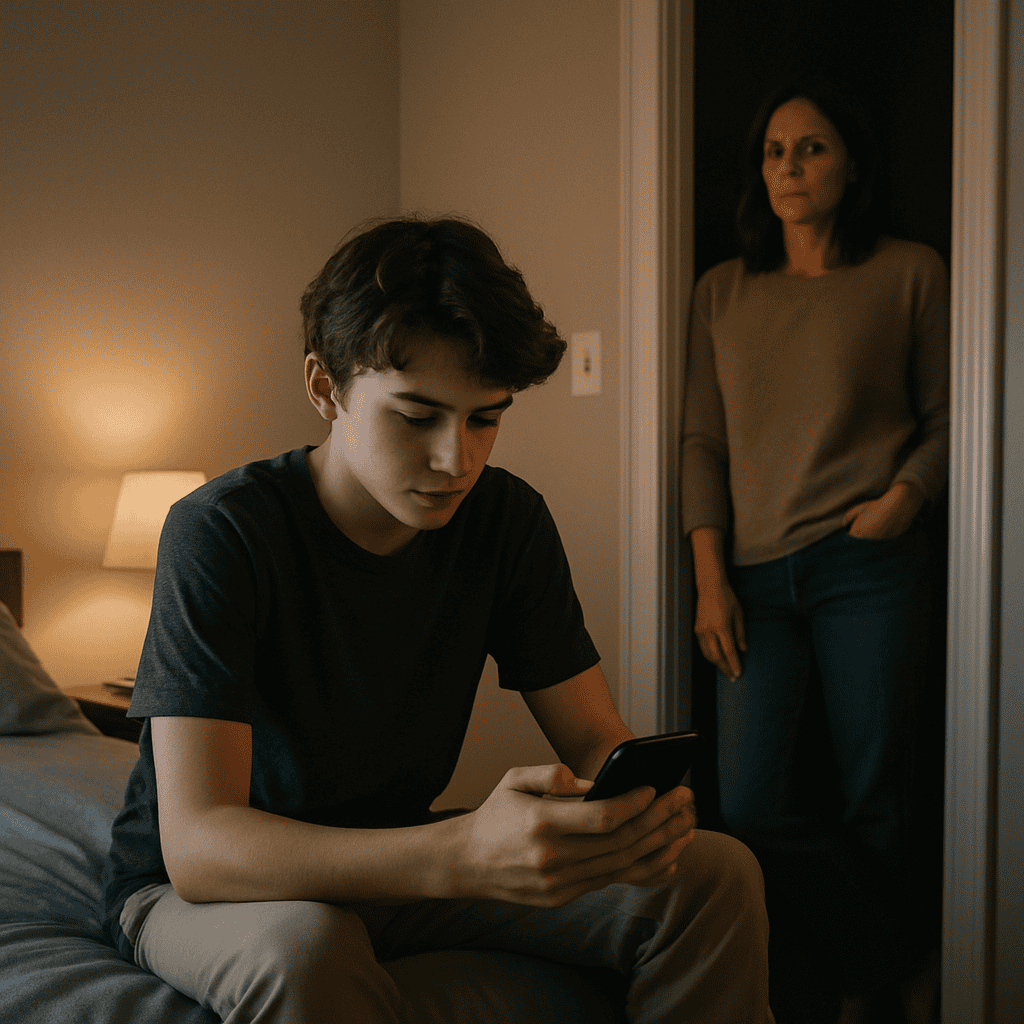
The most common mistake in understanding co-regulation vs self-regulation is assuming that because a child can self-regulate in one context, they should be able to in all contexts. A child who can calm themselves down after a minor disappointment at home may completely lose the ability after a full day of masking emotions at school. The question is not “Is my child capable of self-regulation?” but “Does my child have the capacity for self-regulation right now?”
Watch for these signs that co-regulation is needed: your child cannot make eye contact, their breathing is rapid and shallow, they’re covering their ears or hiding, their voice is high-pitched or they’ve gone silent, they’re hitting or throwing, or they’re repeating “I can’t” or “I don’t know.” These are nervous system signals, not behavior choices. In these moments, trying to coach self-regulation feels to the child like being asked to solve a math problem while drowning. Your job is to be the life raft first. Co-regulation for parents means recognizing when your child’s window of tolerance has closed and providing the external regulation they need to reopen it.
Conversely, signs that your child is ready for supported self-regulation include: they’re able to name the feeling (“I’m really mad”), they’re seeking solutions or asking for help, their body is tense but not in full fight-or-flight, they can hear and process what you’re saying, or they’re using a previously taught strategy (deep breaths, asking for space, squeezing a stress ball). In these moments, you can scaffold self-regulation by narrating the process—”I can see you’re taking deep breaths, that’s helping your body calm down”—or offering a choice between two strategies. The balance between co-regulation vs self-regulation shifts dozens of times a day, depending on context, stress load, and developmental readiness.
Common Myths That Get in the Way
One pervasive myth is that too much co-regulation creates dependence. The research shows the opposite: children who receive consistent co-regulation develop self-regulation earlier and more reliably than children who are left to “figure it out” on their own. Research on the power of co-regulation in shaping emotional development demonstrates that repeated experiences of being helped back to calm literally build the neural pathways for self-regulation. The fear that you’re “doing too much” often stems from cultural narratives about independence that don’t align with what we know about brain development.
Another myth is that self-regulation means never needing help. Even adults with fully developed prefrontal cortexes need co-regulation sometimes—that’s why we call friends after a hard day, seek out a hug from a partner, or feel calmer in the presence of someone we trust. The goal is not emotional self-sufficiency; it’s flexibility—the ability to self-regulate when possible and seek co-regulation when needed. When we frame co-regulation vs self-regulation as an either-or proposition, we set kids up to feel shame about normal human needs for connection during distress.
A third myth is that teaching self-regulation means teaching kids to suppress emotions. True self-regulation is not about making feelings go away; it’s about riding the wave of emotion without being swept under. Children who are punished for emotional expression or told to “get over it” often learn to suppress, not regulate—which shows up later as anxiety, somatic complaints, or explosive outbursts when the suppression fails. The distinction in co-regulation vs self-regulation is that both honor the emotion; co-regulation helps the child feel the emotion in the presence of a safe other, while self-regulation helps the child tolerate the emotion using internalized tools.
Practical Scripts for Both Modes
Co-regulation scripts focus on presence and safety, not problem-solving. Try: “I’m right here.” “You’re safe.” “This feeling is big, and it will pass.” “I’m not going anywhere.” “Your body is working hard right now.” These aren’t magic words—the regulation comes from the tone and your physiological state while saying them. If you’re saying “you’re safe” through gritted teeth, your child’s nervous system will pick up the incongruence. Co-regulation for parents requires you to find your own calm first, even if that means taking ten seconds to breathe before you walk into the room.
Teaching self-regulation to kids in calm moments sounds different: “When you feel your heart beating fast, that’s your body’s alarm system. Let’s practice what helps turn the alarm off.” “Last time you were upset, you asked for a hug and that helped—do you want to try that again?” “I notice you’re clenching your fists. Let’s squeeze them really tight for five seconds, then let go.” The key is offering the strategy as an experiment, not a command. If the child resists or it doesn’t work, that’s data—not failure. Over time, they’ll build a menu of strategies that work for their unique nervous system.
As children move into middle childhood and adolescence, co-regulation becomes more subtle. It might look like sitting in companionable silence, making their favorite snack without commentary, or simply being in the next room as a steady presence. Emotional volatility at different developmental stages requires you to adjust your co-regulation approach, but the underlying principle remains: your calm, consistent presence is the foundation from which their self-regulation grows. The comparison of co-regulation vs self-regulation is less about replacing one with the other and more about expanding the child’s toolkit while keeping the scaffolding available when they need it.
Understanding co-regulation vs self-regulation reframes your role from “emotion coach in every moment” to “safe base from which independence gradually emerges.” You are not doing too much when you offer co-regulation to a child who needs it. You are building the foundation for the self-regulation they’ll use for the rest of their lives.
Frequently Asked Questions

Lena Carter is a contributing writer for The Daily Well, focusing on practical routines, family systems, and everyday strategies for modern households. With experience managing the demands of a busy home and balancing the realities of modern family life, her work centers on simple, sustainable approaches that reduce stress and create more stability in the day-to-day.
Her writing explores parenting routines, household organization, emotional overwhelm, and the small systems that help families function more smoothly in real life — not just in theory.


