
You walk into the room and catch the look on your child’s face — confusion, maybe a little fear — and you know immediately something is wrong. Your kid saw inappropriate content online, and now you’re standing at the threshold of one of the most uncomfortable parenting conversations you’ll ever have. The next ten minutes matter more than the ten hours of rumination that follow.
This isn’t about screen time rules or parental controls — those are upstream questions. This is about what you say and do right now, when your kid has already been exposed. Whether your child saw porn online, stumbled into violent content, or landed on something disturbing in a Discord channel, your first response sets the tone for whether they’ll come to you again. Most parents, in the heat of the moment, get it backwards. This article is part of our broader guide to digital parenting, where we cover the full spectrum of online safety and tech decisions.
The Exposure-Recovery Window
Key Insight: The first conversation after your kid saw inappropriate content online determines whether they internalize shame or build resilience.
Most parents panic and either over-explain the content or shut down the conversation entirely. But children interpret parental anxiety as confirmation that they did something unforgivable. The goal in the first ten minutes isn’t to teach a lesson — it’s to stabilize the emotional environment so the real conversation can happen later, when neither of you is flooded.
- Regulate your own response before you say anything (your body language speaks louder than your words)
- Name what happened in plain language without dramatizing or minimizing
- Reassure your child that they’re not in trouble and this happens to lots of kids
- Defer the detailed conversation to a calm moment within 24 hours
Think of this as triage, not treatment. You’re stopping the bleed, not performing surgery.
What to Say in the First Ten Minutes When Your Kid Saw Inappropriate Content Online

Your first job is emotional stabilization. If your kid saw inappropriate content online and you walk in with visible panic, they’ll shut down. Children are exquisitely tuned to parental distress, and they’ll interpret your fear as proof that they’ve done something catastrophic.
Start with a single sentence that names what happened without judgment: “It looks like you saw something online that wasn’t meant for kids.” This acknowledges reality without assigning blame. Follow immediately with reassurance: “You’re not in trouble. This happens to a lot of kids, and we’re going to talk about it.”
Do not ask for details yet. Do not demand to see the screen. Do not launch into an explanation of why the content was wrong. Your child is likely experiencing a cocktail of confusion, shame, and fear of punishment. According to ConnectSafely’s guide to social media and digital wellness, children who feel safe disclosing exposure are far more likely to report future incidents before they escalate.
If your child saw porn online, resist the urge to over-explain what they saw. At this stage, a child under ten likely doesn’t have the cognitive framework to process a full sex-ed conversation in the same moment they’re processing shock. Say: “That was something made for adults, not for kids. We’ll talk more about it soon, but right now I just want you to know you didn’t do anything wrong.”
Close the device. Suggest a snack, a walk, or a low-stakes activity. Physical movement helps discharge the sympathetic nervous system activation that comes with shock. The conversation isn’t over — it’s paused.
The Longer Conversation: Timing and Framing for When Your Kid Saw Inappropriate Content Online

Within 24 hours, circle back. Pick a neutral setting — the car is ideal, because side-by-side conversation removes the intensity of eye contact. Start by asking an open-ended question: “Can you tell me what you saw, in your own words?” This gives you critical information about what they actually absorbed versus what they’re imagining.
Children often misinterpret what they see. A kid who saw violent content might think it was real footage; a child who stumbled into sexual content might not understand what they were looking at. Your job is to fill in context without adding detail they don’t need. For example, if a seven-year-old says, “I saw people without clothes doing something weird,” you don’t need to explain sexual mechanics. You can say: “That’s something adults do in private. It’s not something kids are ready for, and it’s not something you need to think about right now.”
For older kids — ten and up — you can be more direct. Explain that pornography is a distorted version of adult intimacy, designed to be shocking and profitable, not educational. Emphasize that it doesn’t represent real relationships, consent, or respect. If your kid saw violent content, name the difference between fiction, news, and exploitation. According to Common Sense Media’s research on online harm, children who receive clear, shame-free explanations after exposure show lower rates of repeat seeking behavior.
End this conversation with a question: “How are you feeling about what you saw?” Let them lead. Some kids want to forget. Others need to process. Both are normal. Reassure them that they can come to you anytime something confusing or uncomfortable happens online, and they won’t be punished for telling the truth.
When Your Child Saw Porn Online: Age-Specific Responses
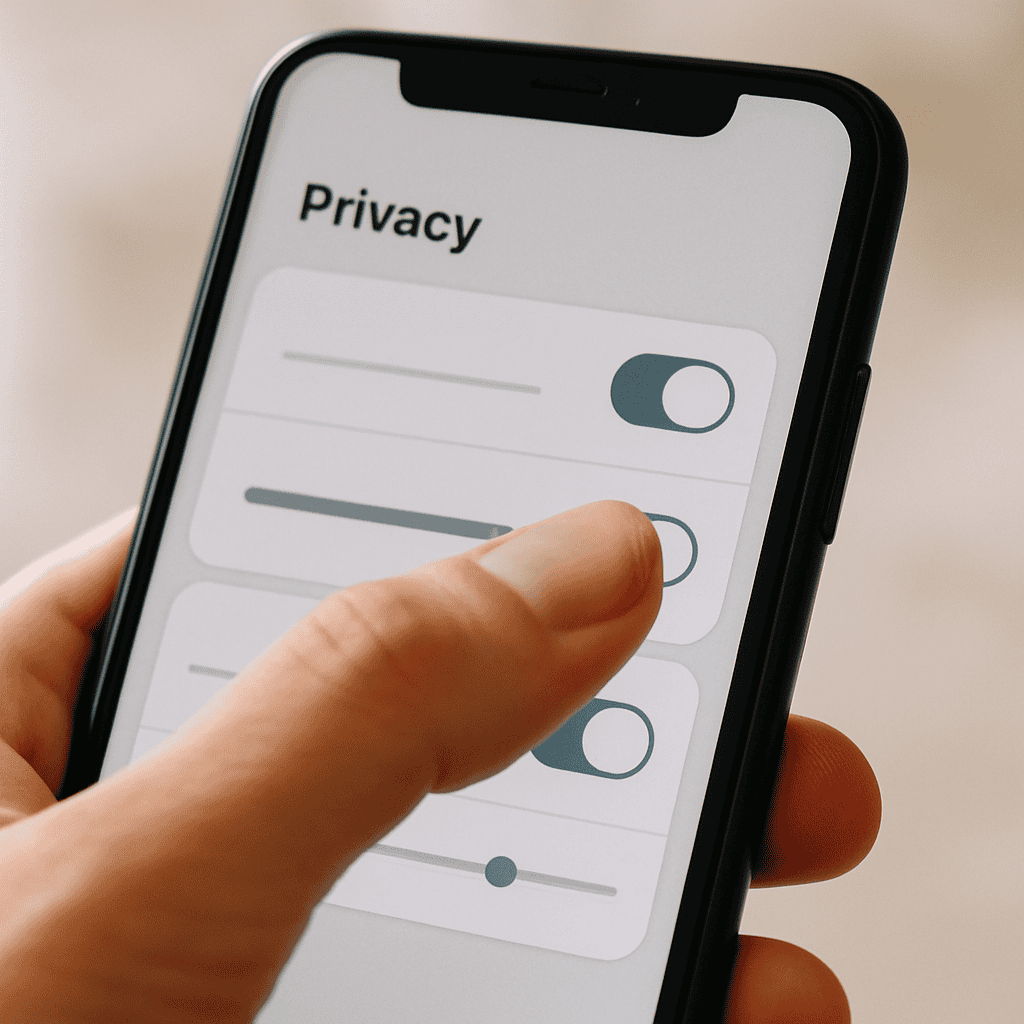
The conversation changes based on developmental stage. A six-year-old who accidentally clicks a pop-up needs a different response than a thirteen-year-old who sought content out of curiosity. If your kid saw inappropriate content online at a young age, brevity and reassurance matter most.
For children under eight, keep explanations concrete and short. Say: “That was a picture/video meant for grown-ups. It’s not something you’re supposed to see yet. You didn’t do anything wrong, and we’re going to make sure it doesn’t pop up again.” Then move on. Over-explaining can create curiosity or anxiety where there was none. Follow up by adjusting parental controls on the device in question, but do it without fanfare.
For children ages eight to twelve, you can introduce the concept of media literacy. Explain that some content online is designed to grab attention in ways that aren’t healthy or appropriate. If your child saw porn online in this age range, frame it as something that shows an unrealistic and sometimes harmful version of adult behavior. Emphasize that real relationships are built on communication, care, and respect — not performance or shock value.
For teens, assume they have some baseline awareness of sexual content, even if this is their first direct exposure. The conversation shifts from “what” to “why” and “how to think critically.” Discuss consent, the commercial nature of pornography, and the difference between curiosity (which is normal) and compulsive seeking (which signals a need for support). Ask: “What questions do you have?” and be prepared for silence. Teens often need time to formulate their thoughts. Leave the door open.
What to Do After Your Kid Saw Inappropriate Content Online: Next Steps and System Adjustments
Once the emotional conversation is handled, turn to practical adjustments. The goal isn’t to lock down every device — that’s both impossible and counterproductive — but to reduce the likelihood of accidental re-exposure and to teach your child how to navigate risk. If your kid saw inappropriate content online, the environment likely has a gap that needs closing.
Start with device auditing. Where did the exposure happen? YouTube autoplay? A game chat? A search gone sideways? Each platform has different controls. YouTube has Restricted Mode; gaming platforms like Roblox and Discord have privacy settings; browsers have SafeSearch filters. Tighten the most obvious gap first, but don’t announce it as punishment. Frame it as a shared adjustment: “We’re going to turn on some settings that filter out stuff that’s not meant for kids.”
Next, teach the “exit strategy.” Walk your child through what to do if something uncomfortable appears on screen: close the tab, turn off the device, and tell an adult — in that order. Role-play it if your child is young. The goal is to turn an overwhelming moment into a procedure. When your kid saw inappropriate content online this time, they may have frozen. Next time, you want them to have a script.
Consider whether your child needs co-viewing or co-play time for a period. This isn’t about surveillance — it’s about rebuilding context and trust. Sit with them while they watch YouTube or play online for a week. Narrate what you notice: “Oh, that ad is trying really hard to get you to click.” “That thumbnail looks like clickbait.” “That comment section is getting mean — probably time to scroll past.” You’re modeling critical consumption, not policing.
Finally, loop back in a week. Ask: “Have you seen anything else online that felt weird or uncomfortable?” Normalize ongoing disclosure. If your kid saw inappropriate content online once, statistically they’ll encounter something again. The question is whether they’ll tell you.
Common Mistakes Parents Make When Their Kid Saw Inappropriate Content Online
The most common parental error is catastrophizing. A single exposure to inappropriate content does not irreversibly damage a child. What does cause harm is a parent’s reaction that signals the child is now “ruined,” “corrupted,” or “lost.” Children internalize the emotional weight you assign to an event. If you treat this as a crisis, they’ll carry shame. If you treat it as a manageable, teachable moment, they’ll carry resilience.
The second mistake is interrogation. Demanding to know every detail — “What exactly did you see? How long were you watching? Did you search for it?” — feels like an investigation, not a conversation. Children will either clam up or fabricate answers to avoid your distress. Keep questions open-ended and curiosity-driven, not prosecutorial.
Third is the technology ban. Some parents, after their kid saw inappropriate content online, confiscate all devices indefinitely. This solves nothing. It signals that the internet is inherently dangerous and that the child can’t be trusted. It also eliminates the opportunity to teach navigation, discernment, and recovery. Better to adjust access incrementally and to supervise more closely in the short term, while keeping the long-term goal in sight: raising a child who can use technology responsibly without a parent standing over their shoulder.
Finally, avoid the sex-talk dump. If your seven-year-old accidentally saw sexual content, this is not the moment to deliver the full birds-and-bees lecture. Answer the question they’re asking, not the one you think they should be asking. Developmental readiness matters. Over-explaining can introduce concepts a child isn’t cognitively prepared to process, creating more confusion than clarity.
Frequently Asked Questions

Ethan Cole is a contributing writer for The Daily Well covering parenting technology, screen-time culture, family systems, and modern household organization. His background includes graduate work in business and finance, along with experience in operations, consulting, and technology systems architecture.
His work focuses on reducing real-world friction for busy families navigating modern life, with a particular interest in digital overwhelm, technology habits, productivity systems, and the intersection between modern parenting and everyday technology.


