Most parents hit a specific wall around age thirteen or fourteen: the bedtime routine that worked since kindergarten suddenly collapses. Your teen ignores the 9 p.m. reminder, dismisses your concern, and stays up until midnight anyway. You lie awake, frustrated and worried, knowing they have to be up at 6:30 a.m. The problem isn’t defiance — it’s that you’re still enforcing a bedtime routine for teens using a system designed for an eight-year-old. Adolescent neurobiology, social development, and school demands require a fundamentally different approach.
This article is part of our broader guide to Family Routines. This article is part of our broader guide to family routines that adjust as kids grow. We’ll unpack why teen sleep is structurally different, what a functional teen sleep routine actually includes, and how to shift from enforcement to collaborative design without abandoning the structure your teen still needs.
The Circadian Shift Module
Key Insight: Teens aren’t staying up late because they’re irresponsible — their circadian rhythm biologically shifts later during puberty, creating a two-hour delay in natural sleep onset.
This isn’t behavioral. Starting around age twelve, melatonin release delays by approximately 90-120 minutes compared to childhood. A teen who felt sleepy at 8:30 p.m. at age ten now doesn’t produce melatonin until after 10:30 p.m. Enforcing an 8:30 p.m. bedtime for a fifteen-year-old is like asking an adult to fall asleep at 6 p.m. — the body simply isn’t ready. Most parent-teen bedtime battles are a clash between adult expectations and adolescent biology.
- Natural sleep onset shifts to 10:30–11:30 p.m. during adolescence
- Teens need 8–10 hours of sleep but have school start times incompatible with this rhythm
- Forcing an early bedtime creates frustration without producing actual sleep
- A functional bedtime routine for teens starts by acknowledging this biological reality
The fix isn’t lowering expectations — it’s designing a teen sleep routine around the circadian reality, focusing on consistency, wind-down quality, and managing the gap between biology and school demands.
Why the Elementary School Bedtime Routine Stops Working for Teens
The elementary bedtime routine for teens you used from ages five to twelve relied on parental control: you announced bedtime, supervised the checklist, turned off the lights. That system breaks down in adolescence not because your teen is rebellious, but because developmental changes render it obsolete. Teens need autonomy, their circadian rhythm has shifted, their homework load extends into evening hours, and their social identity increasingly depends on peer connection — which happens digitally after parents go to bed.
According to Sleep Foundation’s overview on screen time and teen insomnia, the conflict isn’t just biological — it’s social and structural. Trying to enforce an 8:30 p.m. lights-out with a sixteen-year-old who has two hours of homework and active group chats feels punitive to the teen and exhausting to enforce for you. Most parents describe getting teens to sleep as an endless negotiation. The real issue is that you’re using a compliance model in a life stage that requires collaboration. The bedtime routine for teens must shift from “I tell you when to sleep” to “we build a system that protects your sleep while respecting your agency.”
What a Functional Bedtime Routine for Teens Actually Includes

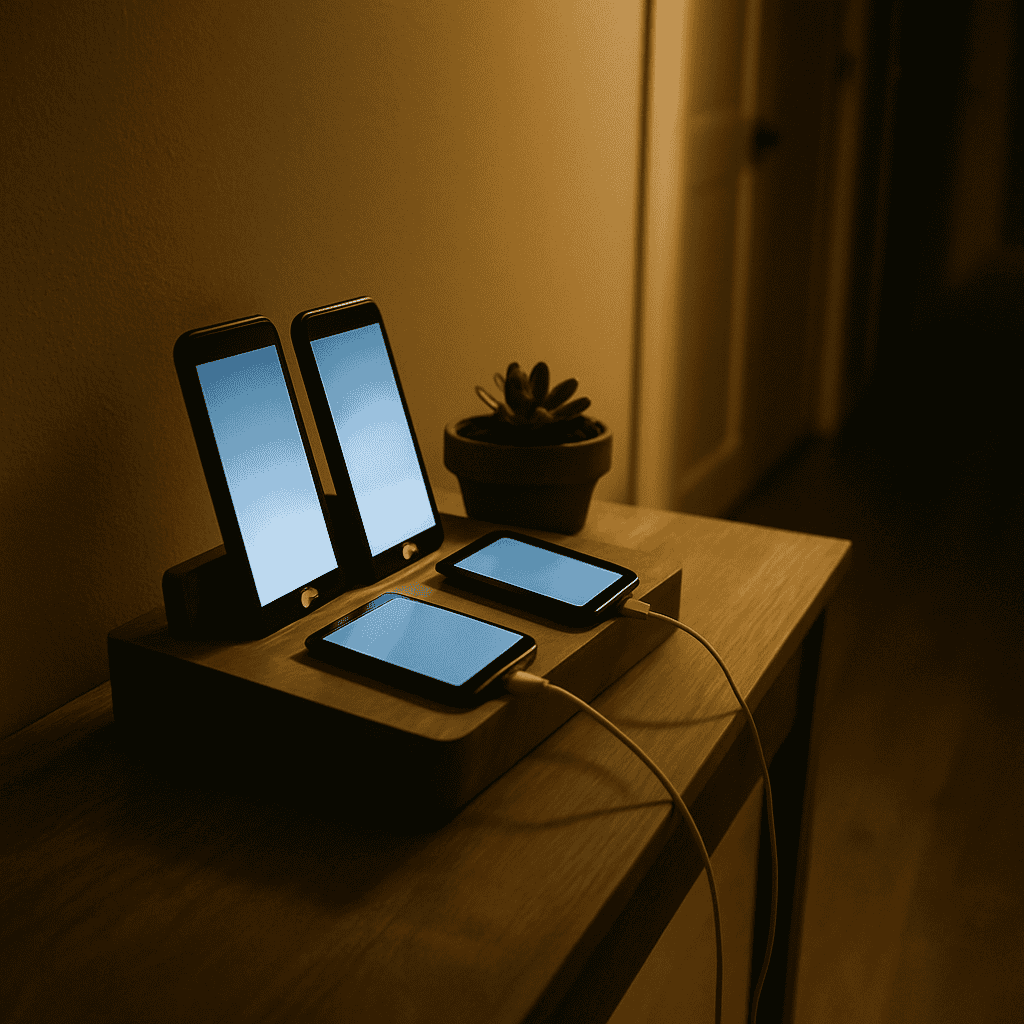
A working teen sleep routine isn’t a list of tasks — it’s a scaffold that accommodates autonomy while protecting non-negotiable sleep hygiene. Here’s what the structure includes: a agreed-upon wind-down start time (not a fixed bedtime), a device handoff or charging station protocol, a thirty-minute transition buffer, and a consistent wake time even on weekends. The goal isn’t compliance; it’s building a routine your teen can internalize and maintain independently by the time they leave for college.
Start with the wind-down window. Instead of announcing “bedtime is 9 p.m.,” negotiate a wind-down start time between 9:30 and 10 p.m. During this window, your teen finishes homework, showers, and begins reducing stimulation. The actual lights-out time may float between 10:30 and 11 p.m., but the wind-down is consistent. This respects the circadian shift while maintaining structure. Next, establish a device protocol. Rather than physically confiscating phones — which feels infantilizing and breeds resentment — create a charging station outside the bedroom or use a lockbox with a timer. Cleveland Clinic’s guide to better sleep emphasizes that blue light exposure within two hours of sleep suppresses melatonin, compounding the already-delayed circadian rhythm in teens. Frame this as protecting their sleep, not punishing them. A bedtime routine for teens works when the teen understands why each element exists.
The thirty-minute buffer is critical. Teens are dealing with academic stress, social anxiety, and identity formation — they can’t shut down instantly. Build in time for journaling, reading, stretching, or listening to music. Some teens need this time to decompress from the day; trying to eliminate it in the name of efficiency backfires. Finally, protect the wake time. Adolescents will sleep until noon on weekends if allowed, which further delays their circadian rhythm and makes Monday morning brutal. Keep weekend wake times within ninety minutes of weekday wake times. This is one of the few non-negotiables in the bedtime routine for teens, and it has the largest impact on weekday sleep quality.
How to Transition from Enforcement to Collaboration Without Losing Structure

The hardest part of redesigning a bedtime routine for teens isn’t the logistics — it’s the emotional shift from control to collaboration. You’ve spent a decade managing your child’s sleep, and letting go feels risky. But teens who don’t learn to manage their own sleep in high school arrive at college without the executive function to do so independently. The transition requires a single conversation, a co-designed agreement, and a two-week trial with built-in check-ins.
Sit down with your teen outside of bedtime conflict — ideally on a weekend afternoon when neither of you is stressed. Frame the conversation as a reset, not a punishment. Say something like: “The way we’ve been handling bedtime isn’t working for either of us. I want to design a system with you that protects your sleep but gives you more control.” Then co-design. Ask your teen what time they realistically feel tired, what’s keeping them up, and what support they need. Most teens will admit they’re on their phone too long or that homework bleeds into late evening. A Stanford Children’s Health feature on sleep and routine transitions found that teens are more compliant with sleep rules they helped create. Negotiate the wind-down start time, the device handoff protocol, and consequences for the trial period. Write it down. This becomes your shared agreement, and it transforms the bedtime routine for teens from a power struggle into a mutual commitment.
Run the trial for two weeks. Check in at the one-week mark: What’s working? What’s not? Be willing to adjust. If your teen says the 10 p.m. wind-down feels too early, try 10:15 p.m. The goal is finding a system that actually works, not winning. At the two-week mark, evaluate together. If your teen has mostly stuck to the agreement, increase autonomy — maybe they manage their own device handoff. If they haven’t, pull back and add more structure temporarily. The collaboration isn’t permissive parenting; it’s scaffolding toward independence. The best bedtime routine for teens is the one they’ll maintain when you’re not in the house.
The Sleep Debt Problem and Why Weekend Recovery Doesn’t Work
Even with a solid teen sleep routine, most adolescents are operating on chronic sleep debt. If your teen needs nine hours and gets seven on weeknights, that’s ten hours of debt by Friday. The instinct is to let them “catch up” by sleeping until noon on weekends. It feels compassionate — but it actually makes the problem worse. Sleeping in shifts the circadian rhythm even later, so Sunday night your teen isn’t tired at 10:30 p.m. anymore — they’re wired until midnight. Monday morning becomes brutal, and the cycle repeats.
The better strategy is to protect weeknight sleep and keep weekend wake times consistent. That means addressing the root causes of weeknight sleep loss: late homework, overscheduled evenings, and phone use. If your teen is doing homework until 10:30 p.m. every night, the problem isn’t the bedtime routine for teens — it’s the course load or time management during the afternoon. Work backward from the necessary sleep window. If your teen must wake at 6:30 a.m. and needs nine hours, they need to be asleep by 9:30 p.m. If the circadian rhythm won’t allow sleep before 10:30 p.m., something has to give: either the wake time (unlikely with school start times), the sleep duration (dangerous for development), or the evening schedule. Many families find that dropping one extracurricular or frontloading homework to right after school makes the teen sleep routine feasible. You can’t solve a structural problem with better bedtime habits alone, but you also can’t ignore the routine and hope scheduling fixes everything. Both matter.
For context on how much sleep deprivation undermines everything else, look at academic performance, mood regulation, and injury rates. Sleep-deprived teens have slower reaction times, impaired memory consolidation, and higher rates of anxiety and depression. Getting teens to sleep isn’t about control — it’s about protecting the neurological and emotional development that depends on consistent, sufficient rest. When you frame the bedtime routine for teens as a health priority rather than a behavioral issue, both you and your teen can approach it with less defensiveness.
Frequently Asked Questions

Lena Carter is a contributing writer for The Daily Well, focusing on practical routines, family systems, and everyday strategies for modern households. With experience managing the demands of a busy home and balancing the realities of modern family life, her work centers on simple, sustainable approaches that reduce stress and create more stability in the day-to-day.
Her writing explores parenting routines, household organization, emotional overwhelm, and the small systems that help families function more smoothly in real life — not just in theory.