
A practical guide to everyday family routines
Family Routines for School-Age Kids
Less reminding. More predictable days.
Simple, flexible routines that help families make school mornings, afternoons and evenings easier to manage.
A practical guide to everyday family routines
Less reminding. More predictable days.
What is a family routine? A family routine is a familiar sequence of everyday steps that children and caregivers can follow together. For school-age kids, routines help organize mornings, the transition home from school and bedtime. The best routines are predictable but flexible, with clear expectations, age-appropriate responsibilities and a simpler backup for busy days.
A missing shoe, an unsigned form or a late start can throw off the whole household. Start with the transition that most often becomes difficult, and give everyone an easy way to recover when plans change.
Start with whichever transition creates the most friction: getting out the door, coming home from school or winding down at night. You do not need to reorganize every hour. The American Academy of Pediatrics recommends routines that are predictable and consistent, but flexible enough for different children and households.
The Daily Well framework
The Routine Reset Method
When a routine keeps breaking down, make the next step easier rather than adding more rules. This four-part method is a practical editorial framework, not a clinically tested treatment.
- 01
Find the friction point
What specifically causes the delay? Lost supplies, unclear instructions, hunger, a rushed transition or an unrealistic schedule?
- 02
Choose one anchor
Pick one dependable action, such as putting backpacks and shoes in the same place every evening.
- 03
Make the next step visible
Use a short checklist, a picture cue or a written plan that a child can follow without repeated reminders.
- 04
Plan for the hard day
Decide what is essential when school runs late, activities change or nobody has much energy left.
Interactive tool / Free, no account required
Build a Routine That Fits Your Family
Choose a starting point, then edit the steps. Print your finished checklist or use your browser’s Save as PDF option. Your entries are not saved. They disappear if you reload or leave this page, and they are not sent to The Daily Well.
YOUR EDITABLE CHECKLIST
My school morning
Change any step, reorder it, or add your own. These suggestions are not required tasks.
- Get dressed
- Eat breakfast and drink water
- Brush teeth
- Check backpack and lunch
- Put on shoes and leave
Adaptable examples
See a Realistic Day, Step by Step
Illustrative times, not a prescribed schedule. Use your family’s actual school and work hours.
- 6:45 AMWake, bathroom and get dressedMake clothes accessible the night before.
- 7:00 AMBreakfastAllow time to eat rather than rushing.
- 7:15 AMTeeth and final bag checkUse a visible list, not repeated reminders.
- 7:30 AMLeave for schoolInclude the time you actually need to depart.
- 3:15 PMArrive, put away school itemsReview important school notices.
- 3:30 PMSnack or preferred resetSome children prefer to begin homework first.
- 4:00 PMCheck and begin assignmentsChoose a realistic start time together.
- LaterPack for tomorrowUse a shorter list on activity-heavy days.
- EarlierPack school items and clothesKeep logistics out of the final wind-down.
- NextWash, pajamas and brush teethChoose the order that works at home.
- ThenRead or talk quietlyKeep the routine manageable.
- BedtimeLights out at your planned timeSet the time using your child’s sleep needs.
01 / School-day preparation
Morning Routines for School-Age Kids
Make getting ready for school predictable without turning breakfast into a race against the clock.
Pick an order your child can recognize and keep it familiar each school day. The five-step checklist below is one example, not a rulebook. Younger children may need help getting started; preteens can increasingly use a short list independently.
Do the predictable work the night before. Choose clothes, check school notices and put shoes, lunch supplies and backpacks in one designated place. The AAP recommends a central spot for school belongings so families do not spend the morning searching for them.
A five-step school-morning checklist
- Get dressed and ready for the weather.
- Eat breakfast and have water.
- Brush teeth and finish personal care.
- Check backpack, lunch and school notices.
- Put on shoes and leave from the agreed spot.
If your child stalls at the same step, change the environment before adding reminders. Put shoes by the door, offer two suitable outfits instead of ten, or move backpack packing to the evening.
More Morning Routine Guides
 Morning Routine for Two-Earner Households That WorksA morning routine designed for two-earner households where both parents have firm departure times — no one's chaos sacrificed for the other's.Read the guide ↗
 Morning Routines for Kids by Age: What Works From 2 to 18The morning routine that worked beautifully for your five-year-old suddenly feels impossible with your seven-year-old. What actually works shifts dramatically as children develop—here's how to…Read the guide ↗
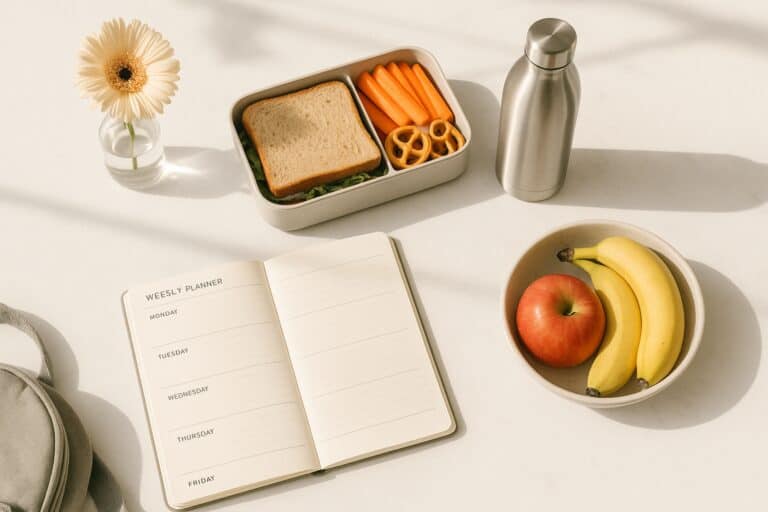 Morning Routines for School Days That Actually Work in Real HomesThe difference between school mornings that work and ones that derail isn't perfection—it's understanding why mornings fall apart and building routines around real human behavior…Read the guide ↗
02 / The transition home
After-School Routines That Leave Room to Breathe
Give homework a clear place in the day without assuming every child should start it the minute they walk inside.
The period between dismissal and dinner can hold homework, sports, errands, chores and family commitments. Instead of a rigid minute-by-minute plan, use three checkpoints: arriving home, starting responsibilities and preparing for tomorrow.
At arrival, place shoes and bags where they belong, empty the lunchbox, put important school notices in one place and have a snack or water if needed. Then decide whether your child does better with movement, quiet time or beginning homework promptly. The AAP notes that healthy after-school routines can include snacks, exercise, relaxation and study in the order that suits the child.
Three checkpoints for the school afternoon
- Arrive: Bags away, lunchbox emptied, notices checked.
- Begin: Confirm assignments, gather supplies, choose a workable start time.
- Finish: Return completed work to the backpack and check tomorrow’s plans.
On activity-heavy days, use a shorter version: check school notices, complete the urgent assignment and pack for the next day. If homework regularly ends in arguments, look for hunger, fatigue, unclear instructions or an unrealistic start time before blaming the routine itself.
More After-School Guides
 After-School Restraint Collapse: Why Kids Fall ApartYour child holds it together all day at school, then explodes the moment they walk through the door. After-school restraint collapse isn't defiance—it's neuroscience. Here's…Read the guide ↗
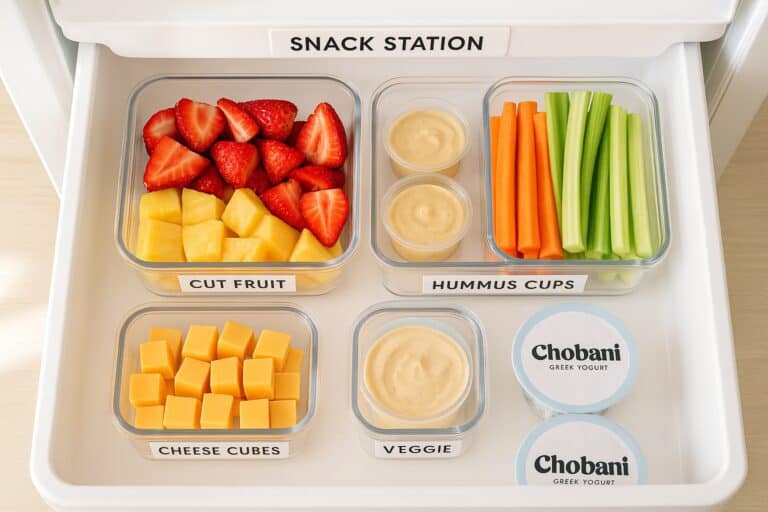 Healthy Snack Systems That End After-School Kitchen ChaosTransform after-school chaos with snack systems that reduce constant food requests, eliminate kitchen grazing, and teach kids independence—without becoming a short-order cook.Read the guide ↗
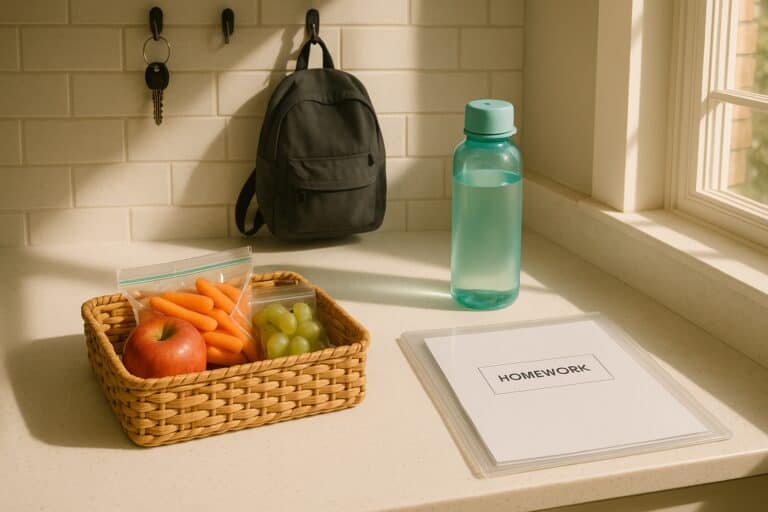 After-School Routine for Kids: A Calm 3-Step PlanThe after-school hours shape everything that follows: homework cooperation, sibling dynamics, and even bedtime success. Here's the regulation-first framework that transforms 4 pm from chaos…Read the guide ↗
03 / Evenings and sleep
Bedtime Routines for School-Age Children
Protect enough sleep by beginning the evening routine before everyone is already exhausted.
Start with the school-day wake-up time and work backward. The CDC, citing the American Academy of Sleep Medicine, lists 9–12 hours of sleep per 24 hours for ages 6–12 and 8–10 hours for ages 13–18. Individual needs vary, and a family schedule should allow a realistic opportunity for enough sleep.
Separate practical preparation from the calming final steps. Check tomorrow’s schedule, set out clothes and pack supplies earlier in the evening. Then follow a familiar sequence such as bath or shower, pajamas, brushing teeth, reading and lights out. The AAP recommends manageable bedtime routines. Older children may need fewer reminders or a different checklist than younger children.
A simple wind-down sequence
- Finish school and next-day preparation.
- Set a clear stopping point for recreational screens.
- Bathed or washed, pajamas on and teeth brushed.
- Read, talk quietly or enjoy another calm activity.
- Lights out at a time appropriate for sleep needs.
If bedtime repeatedly runs late, move the first preparation step earlier rather than adding more warnings at the end. The AAP’s Family Media Plan can help families set screen-free times and spaces.
When to ask a clinician: Persistent difficulty falling asleep, loud snoring, breathing problems during sleep or excessive daytime sleepiness warrants a conversation with your child’s pediatrician. A routine alone cannot address every sleep issue. See AAP sleep guidance for more context.
More Bedtime Routine Guides
 Reading vs Screens Before Bed: What’s Better for Kids?The debate over reading vs screens before bed isn't really about blue light — it's about what your child is doing with their brain in…Read the guide ↗
 Bedtime Routine for Active Kids: How to Calm Busy EveningsHigh-energy kids often escalate instead of winding down at bedtime. This guide explains why typical routines backfire and which sensory adjustments help active children transition…Read the guide ↗
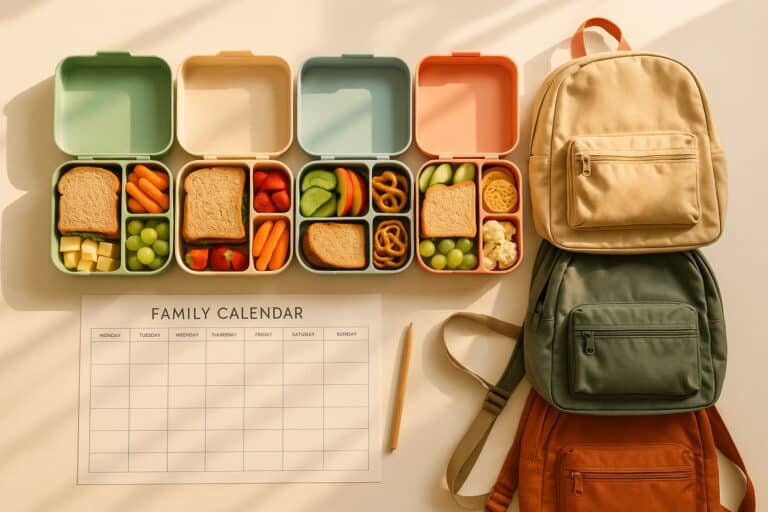 Evening Routines for Large Families: Systems That Reduce ChaosThe chaos of large family evenings isn't a sign you're failing—it's a design problem. Learn how to create evening routines that reduce transition collisions, stagger…Read the guide ↗
04 / The Daily Well practical tools
Find the right routine chart.
Find a printable checklist or build a short routine you can use today.
Browse the collection
Choose a resource
6 resources in this collection
No matching resources.
How to choose a chart your child will actually use
A good routine chart is short, specific and placed where it will be used. For a younger child, pictures or a five-task list may be enough. An older child might prefer a weekly planner with school deadlines, activities and responsibilities. Ask your child to help choose wording that makes sense to the person using it.
Start with one chart, not a wall of systems. Test it for several days, remove steps that no longer need reminders and revise tasks that regularly cause confusion. A calendar or notebook can work as well as a printable. The value comes from making expectations clearer, not the paper itself.
When the plan breaks
When routines go off track.
A smaller change can make the biggest difference.
Four common problems / Where to start
Look for the recurring obstacle before changing the whole schedule.
Everything gets lost before school
Try: a single spot for shoes, school forms, backpacks and lunch supplies. Check it before bedtime.
Homework turns into an argument
Try: checking for hunger, fatigue, confusing assignments or a start time that doesn’t fit the day.
Bedtime keeps sliding later
Try: moving packing and household chores earlier so the final wind-down can stay short.
One child needs more reminders
Try: fewer instructions at once, a visual cue, transition warnings or adult help with the first step.
Development matters
Adapt the plan to your child’s age.
Early elementary
Use three to five picture-supported steps and practice the first one together. Put shoes, bags or bedtime supplies where your child can reach them.
Older elementary & preteens
Let children check their own bags and help choose homework timing. A simple calendar can show assignments while a brief check-in catches missed details.
Teenagers
Agree on deadlines, screen boundaries and sleep expectations together. Give teens more control over the order of tasks, then review what works.
Try an adjustment for about a week, then ask: Did mornings need fewer reminders? Did homework start more easily? Did bedtime begin earlier? If not, change the timing, number of steps or amount of help. For a more detailed explanation, see our guide to building family routines that actually work.
Parents ask
Common Questions About Family Routines
Practical answers to common questions about routine length, independence, weekend flexibility and what to do when plans change.
What is the best family routine to start with?
Choose the part of the day that causes the most recurring problems. If mornings are rushed, start there. If evenings repeatedly end late, begin with bedtime. Change one sequence before introducing another.
How many steps should a child’s routine have?
Use only as many steps as the child can understand and act on. A younger child may start with three to five simple tasks; an older child may manage a more detailed list. Shorten the list if reminders become constant.
Are printable family schedules actually helpful?
They can make expectations easier to see. Keep the chart specific, place it where the task happens and ask your child whether it is useful. A printed chart is optional; a notebook or calendar may work just as well.
How do we keep routines consistent across two households?
Agree on a few shared anchors, such as where homework goes, what travels in the backpack and a workable bedtime window. Each household can handle the remaining details differently.
How do we restart routines after summer or a holiday?
Begin by returning to a familiar wake-up and bedtime window and practicing one important routine before school resumes. Adjust based on your child’s response.
What is a good evening routine for families?
An evening might include dinner, cleanup, finishing responsibilities, preparing for tomorrow and a calm bedtime sequence. Keep the order familiar while allowing different timings on busy days.
How do routines help with screen time?
Agree in advance on when recreational screen use starts and stops, and what activity comes next. The AAP recommends considering screen-free times and spaces, especially around meals, homework and sleep.
What if my child resists every routine?
Ask which step is hardest. The child may need clearer instructions, advance notice, fewer choices or help beginning. Try simplifying the routine and involving your child in finding a workable adjustment.
Do routines also work for toddlers and preschoolers?
Younger children can benefit from familiar, predictable sequences and adult help. Use simpler wording and visual cues. This hub focuses on school-age children, so younger children’s routines should be adapted to their developmental needs.
How can working parents keep routines consistent?
Write down the essentials so different caregivers can follow them. Assign responsibilities clearly, prepare important items ahead of time and keep a shorter backup version for unpredictable workdays.
Should weekend routines be different?
Weekends can be more flexible. Keeping familiar meal and sleep habits may help the transition back to school. School-age children and teenagers will need different levels of flexibility.
How often should family routines change?
Revisit a routine when school schedules change, children become more independent or the same problem repeatedly returns. Make adjustments to steps, timing or responsibilities instead of continuing a plan that no longer fits.