
Most parents introduce location tracking with the best intentions: safety, peace of mind, a way to stay connected. But by the time kids are tweens, the technology conversation that matters most isn’t about which app to use. It’s the privacy conversation every tween deserves—the one that names what’s being traded, what autonomy looks like at different ages, and how care can coexist with dignity.
This conversation isn’t a single event. It’s a framework for talking about phones, tracking, social media, and monitoring tools as kids grow. The families who handle the transition to adolescence best aren’t the ones with the strictest rules or the most lenient policies—they’re the ones who talk explicitly about privacy before decisions get made. As part of our broader guide to digital parenting, this article offers a structure for having that conversation well.
The Autonomy-Surveillance Tension
Key Insight: Most tween privacy conflicts stem from unspoken expectations—parents see monitoring as care, tweens experience it as mistrust, and nobody named the trade-off out loud.
The shift happens around age 10-12, when children begin to develop what developmental psychologists call “autonomous self-regulation”—the ability to manage behavior based on internal values rather than external oversight. Monitoring tools introduced before this shift often persist unchallenged into adolescence, creating resentment without either party understanding why. The discomfort isn’t about the technology—it’s about a developmental milestone the family system hasn’t acknowledged.
- Tween feels surveilled but doesn’t have language to articulate why it feels different than when they were younger
- Parent feels anxious when monitoring decreases, interpreting independence as risk rather than growth
- Neither party distinguishes between safety tools (emergency contact) and oversight tools (continuous tracking)
- Conflict escalates because the underlying need—autonomy with connection—hasn’t been named
The conversation reframes the question from “how much can I monitor?” to “what does my child need to practice now to be ready for full autonomy at 16 or 18?”
Why the Privacy Conversation Every Tween Deserves Happens Around Age 10-12

The timing isn’t arbitrary. Between ages 10 and 12, most children begin to distinguish between private thoughts and public behavior, develop a clearer sense of self separate from family identity, and start testing independence in low-stakes environments. According to a Pew Research analysis of mobile device ownership, 91% of teens have access to a smartphone by age 13—but the privacy expectations around that phone are almost never discussed before it’s handed over.
What makes this developmental window critical is that tweens are beginning to form peer relationships that matter as much as family relationships. They’re experimenting with identity—testing out jokes, interests, and social roles. The privacy conversation every tween deserves acknowledges this shift explicitly: you’re becoming someone separate from us, and that’s healthy. When parents skip this framing and jump straight to location tracking or monitoring tools, tweens often interpret it as a rejection of their emerging autonomy.
The families who navigate this well treat the conversation as a milestone, like getting a learner’s permit. They’re naming a new phase, not reacting to a problem. One mother told us she marked her daughter’s 11th birthday by sitting down with a notebook and asking: “What do you think privacy means? What feels important to you now that didn’t used to?” The answer—”I want to be able to text my friends without you reading over my shoulder”—led to a clear agreement about messaging apps, screen placement, and what kinds of content she’d still expect to discuss. The key wasn’t the specific rule; it was that the child felt consulted.
The Three-Layer Privacy Framework for Tweens
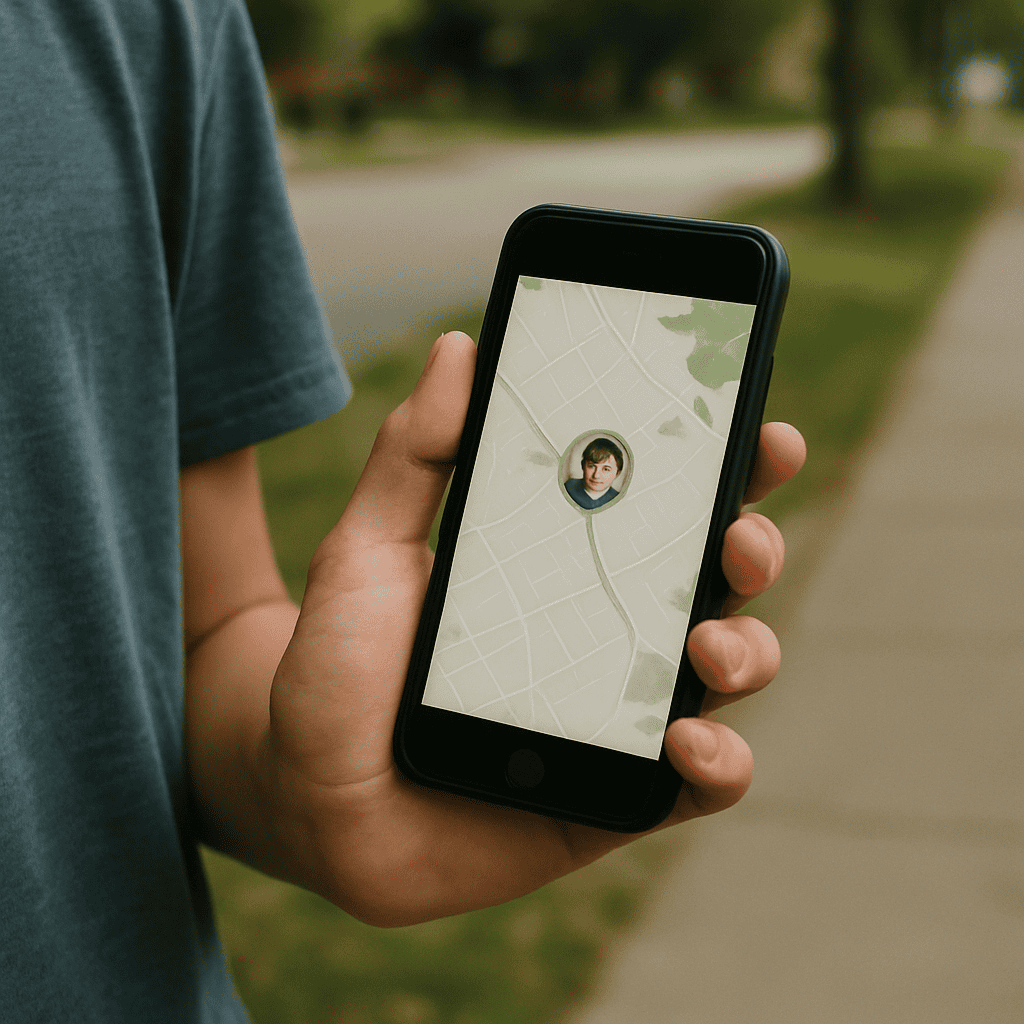
The privacy conversation every tween deserves isn’t about saying yes or no to monitoring—it’s about defining which layers of privacy expand at which ages. Most conflicts happen because families treat privacy as binary (all or nothing), when in practice it operates across at least three dimensions: physical privacy, digital privacy, and relational privacy.
Physical privacy is the easiest to grant and the least controversial: knocking before entering a bedroom, allowing tweens to change clothes without supervision, respecting closed doors. Most families handle this intuitively, expanding freedom as kids age. It’s the baseline—if you’re not honoring physical privacy, digital privacy conversations will feel hollow.
Digital privacy is where most of the tension lives. This includes location data, message content, browsing history, and app usage. The mistake many families make is giving a phone but reserving full access to everything on it. A better model: start with high transparency (you’ll check in regularly) and a clear schedule for phasing out oversight. For example, you might say: “For the first six months, I’ll do a weekly phone check where we sit together and talk about anything confusing or uncomfortable you saw. At six months, we’ll move to monthly. At a year, I’ll only ask to see something if I’m worried—and I’ll tell you why first.” This approach makes privacy something earned through demonstrated judgment, not age alone.
Relational privacy is the dimension most parents overlook: the ability to have friendships, thoughts, and experiences that aren’t reported to parents in real time. Tweens need practice making decisions without immediate adult input—choosing how to resolve a friend conflict, deciding whether to join a group chat, managing their own social calendar. According to research supported by ConnectSafely’s analysis of location-sharing practices, one of the most common tween complaints isn’t being tracked—it’s being questioned about every deviation from routine. “Why did you stop at the park?” “Who were you texting at 4:18?” These micro-interrogations erode trust faster than the monitoring itself. The privacy conversation every tween deserves includes explicit boundaries around what parents will and won’t ask about, even when the data is visible.
What to Say (and What to Avoid) in the Privacy Conversation Every Tween Deserves

The language you use matters as much as the policy. Many well-meaning parents accidentally communicate mistrust by framing the conversation as risk management rather than relationship building. Here’s what works—and what backfires.
Start with a question, not a policy announcement. “Now that you’re getting older, I want to talk about privacy—what it means to you, what feels fair, and how we’ll handle phones and independence. What do you think privacy should look like for you this year?” This positions you as a partner, not a warden. Tweens who feel consulted are far more likely to honor agreements, even when they’re not getting everything they asked for.
Name the tension out loud. “I want you to have space to figure things out on your own, and I also have a job to keep you safe. Sometimes those two things pull in different directions, and we’ll have to figure out the balance together.” This kind of transparency—admitting the dilemma rather than pretending there isn’t one—builds trust. It also teaches tweens how to think about competing values, which is one of the core skills of adolescence.
Distinguish between safety tools and oversight tools. Most parents lump location tracking, screen time limits, and content filters into a single category (“keeping you safe”), but tweens experience them differently. A better approach from the privacy conversation every tween deserves: “Location sharing is about emergencies and logistics—if something goes wrong, I need to be able to find you. That’s not going away. But reading your texts is oversight, and that will change as you show good judgment. Let’s talk about what good judgment looks like to both of us.”
Avoid: “As long as you live under my roof” or “I pay for the phone.” These phrases shut down conversation and communicate that privacy is a privilege you grant or withhold based on compliance, not a developmental need you’re helping your child practice. A Common Sense Media guide to first phones emphasizes that the goal isn’t control—it’s teaching kids to self-regulate in an environment where you can still intervene if needed. Framing privacy as something kids “earn” by good behavior makes it transactional rather than relational. Better framing: “Part of growing up is learning to manage privacy responsibly. We’re going to practice that together.”
Building a Privacy Agreement That Grows With Your Tween
The privacy conversation every tween deserves isn’t one talk—it’s a living agreement you revisit every 6-12 months. The best approach is to co-create a simple written document that names expectations, boundaries, and a schedule for when things will change. This doesn’t need to be formal or legalistic; one family used a shared Google Doc titled “Our Phone & Privacy Plan” that both parent and child could edit.
Start by listing what’s non-negotiable (for now). This might include: location sharing enabled during school hours and evenings, no social media accounts until age 13, parent access to device passcode, and a weekly check-in about online experiences. The key is explaining why each item is non-negotiable and when it will be revisited. “Location sharing is non-negotiable until you’re 14, because you’re still building the habit of letting us know where you are. At 14, we’ll talk about whether you’re ready to manage that independently.”
Next, list what’s negotiable—areas where your tween has input. This might include: which friends can text after 8 p.m., how much advance notice they need to give before going to a friend’s house, whether you’ll do random phone checks or scheduled ones, and what kinds of apps are okay without asking first. When tweens have genuine influence over some rules, they’re far more likely to respect the ones they didn’t choose.
Finally, set review dates. “We’ll revisit this agreement at your birthday, at the start of each school year, and any time either of us feels like something isn’t working.” This makes privacy expansion predictable rather than something kids have to beg for. It also gives you a natural opportunity to acknowledge growth: “Six months ago we were doing weekly phone checks. You’ve handled everything responsibly, so let’s move to monthly.” That kind of explicit recognition reinforces the behavior you want to see.
If you’re weighing whether a smartwatch might meet connectivity needs with fewer privacy trade-offs, the agreement framework works the same way—just with different technical constraints. And if your family is further along in the decision about when a child should get a phone, this conversation becomes the foundation for healthy device use from day one.
When Privacy Conversations Go Sideways (and How to Reset)
Even with the best intentions, the privacy conversation every tween deserves sometimes derails. Maybe you discovered something concerning on your child’s phone and reacted by tightening restrictions without discussion. Maybe your tween lied about where they were, and you responded by adding more monitoring. Maybe you’re co-parenting with someone who has a very different privacy philosophy, and your child is caught in the middle.
The reset starts with naming what happened. “I looked through your phone without telling you first, and I can see now that felt like a betrayal. I was scared, and I didn’t handle it well. Let’s talk about what I was worried about and what you were feeling.” This kind of repair work—acknowledging when you’ve violated the trust you’re asking them to uphold—is one of the most powerful teaching moments of adolescence. Kids learn how to apologize and rebuild trust by watching you do it.
If the issue is a lie or broken agreement on the tween’s side, resist the urge to respond with permanent escalation (“You lied, so now I’m tracking everything forever”). Instead, treat it as data: something in the current system isn’t working. “You told me you were at Emma’s house, but location sharing showed you at the park. That breaks our agreement. Let’s talk about what happened—were you afraid to ask? Did you think I’d say no? What would have made it easier to tell the truth?” Sometimes the lie is a signal that the rules have gotten too restrictive, or that the consequences for honesty feel too steep.
One of the most common privacy conflicts is when a tween asks for something—say, permission to use TikTok—and the answer is no, but the parent discovers the child downloaded it anyway. The conversation that follows matters enormously. A punitive response (“You’re grounded, and I’m taking your phone for a month”) teaches that getting caught is the problem, not the dishonesty. A relational response (“You asked, I said no, and you did it anyway—that tells me either my ‘no’ didn’t make sense to you, or you didn’t believe I’d reconsider. Let’s figure out which one”) keeps the door open to repair. The privacy conversation every tween deserves includes space to negotiate, disagree, and sometimes circle back when new information emerges.
Frequently Asked Questions

Ethan Cole is a contributing writer for The Daily Well covering parenting technology, screen-time culture, family systems, and modern household organization. His background includes graduate work in business and finance, along with experience in operations, consulting, and technology systems architecture.
His work focuses on reducing real-world friction for busy families navigating modern life, with a particular interest in digital overwhelm, technology habits, productivity systems, and the intersection between modern parenting and everyday technology.



