
Is TikTok safe for kids? Not as a single yes-or-no. TikTok safety lives at three structurally different layers \u2014 the Algorithm, the Content, and the Social \u2014 each with its own risk profile and its own controls. Most parents arrive at is TikTok safe for kids with one concern in mind and conflate it with all the others. Separate the layers, map the concern to the right one, apply the matching control, and the question has a calibrated answer for your particular child.
You watched your thirteen-year-old's TikTok For You Page over their shoulder last night and within ninety seconds could not tell why any of those videos were appearing. That feeling is the article. This piece is part of our broader work on digital parenting in the real world, and is the companion to the readiness test for TikTok \u2014 that piece asks whether your kid is ready; this one asks whether the platform is safe and which controls actually matter.
Is TikTok safe for kids? Start with the three-layer model
TikTok is not one thing. The platform has three structurally different safety surfaces, and is TikTok safe for kids depends on which layer your concern lives in.
The Three Layers of TikTok Safety
Key Insight: Most parents have one specific concern about TikTok and conflate it with all the others. The three layers separate cleanly and each one calls for different controls.
- The Algorithm Layer. The For You Page (FYP) is the platform. Recommendation-driven, infinite-scroll, calibrated within minutes by watch-time and rewatches. Algorithmic narrowing is the headline mechanism behind body-image, eating-disorder, depression, and extreme-content concerns. This is where structural risk concentrates.
- The Content Layer. Beauty filters, viral challenges, hypersexualized dance trends, and pseudo-medical and pseudo-mental-health content. The Algorithm decides what arrives. The Content Layer is what actually arrives.
- The Social Layer. Comments, DMs, duets, stitches, lives. Where unwanted contact and harassment concentrate. Smaller share of headline harm than the Algorithm Layer, but more operationally controllable.
Map your concern to the right layer and the control becomes obvious. Conflate them and the conversation stays stuck.
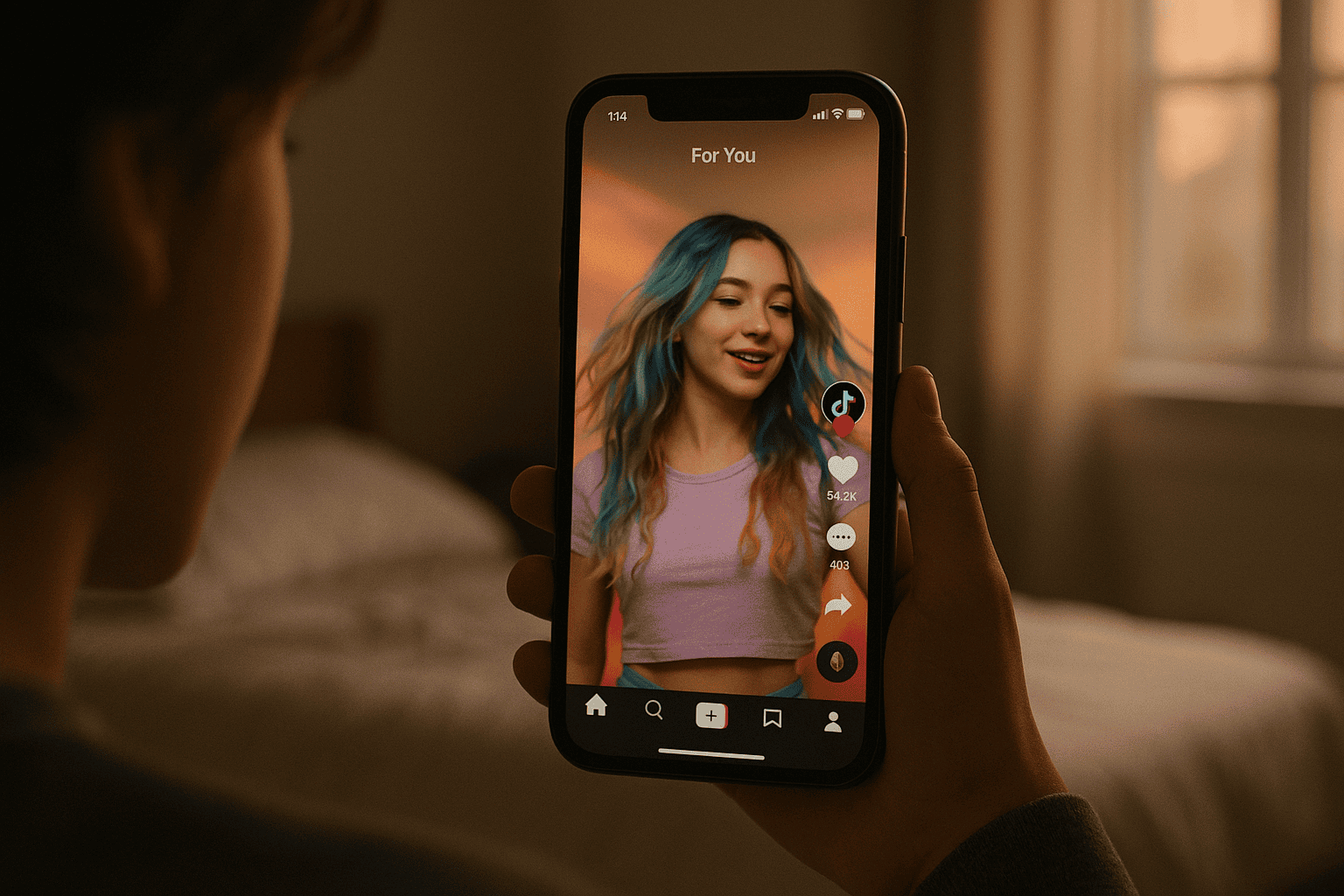
Is TikTok safe for kids at the Algorithm Layer?
This is where the largest structural risk concentrates. The FYP calibrates within the first hour of use \u2014 sometimes much faster \u2014 based on watch-time, rewatches, shares, and lingers. Once it identifies a vulnerable pattern (body-image insecurity, low mood, disordered eating, attraction to extreme content), it surfaces more of that content because the watch-time data says that is what engages the user. The APA's 2023 Health Advisory on adolescent social media use names this mechanism explicitly.
The single most consequential and least-known Algorithm-Layer control is TikTok's "Refresh your For You feed" option in account settings. It resets the algorithm's model. If your teen's FYP has narrowed in a bad direction, the Refresh feature is the operational reset.
Is TikTok safe for kids at the Content Layer?
The Content Layer is what arrives once the Algorithm decides what to send. Three categories dominate parent concern. Beauty filters now appear on a majority of teen-creator TikTok videos, many unlabeled, and the research linking filter exposure to adolescent body-image effects has grown materially. Dangerous challenge content is rare relative to play volume but consequential when it appears \u2014 the FYP's amplification mechanic is what makes a challenge a challenge. Pseudo-medical content is the fastest-growing category: short videos delivering diagnostic claims to vulnerable teens from non-credentialed creators.
Content-Layer mitigation is partial. Restricted Mode filters some sensitive content but does not address filter exposure or pseudo-clinical content. The Algorithm Layer determines exposure; the Content Layer is the symptom. Lock down the Algorithm Layer and Content concerns shrink in tandem.
Is TikTok safe for kids at the Social Layer?
The Social Layer is comments, DMs, duets, stitches, and lives. Most parent worry concentrates here because the harms are concrete and visible. The actual probability of unwanted-contact harm via TikTok DMs is non-trivial but smaller than Algorithm-Layer structural risk \u2014 and much more operationally controllable. The Day-1 TikTok Lockdown below addresses Social-Layer risk almost completely. Pew Research data shows TikTok is the dominant short-form video platform for U.S. teens; the contact vector is real but the controls are real too.
The three specific risks parents have actually heard about
Algorithmic narrowing toward harmful content (Algorithm Layer). Real, structural, the largest aggregate risk. Mitigation: regular Algorithm Resets, time limits, an explicit conversation about FYP narrowing so the teen understands what is happening to their feed.
Body-image and beauty-filter effects (Content Layer). Real and well-documented. Mitigation: Algorithm-Layer controls plus an explicit conversation about filter prevalence. Common Sense Media maintains current guidance in their TikTok parent guide.
DMs and unwanted contact (Social Layer). Smaller probability than headlines suggest; most operationally controllable. Mitigation: the Day-1 Lockdown below.
The Day-1 TikTok Lockdown for parents who say yes
If your kid is on TikTok, run these in priority order.
- Set the account to Private. Default for under-16, but verify; birthdates are often inaccurate.
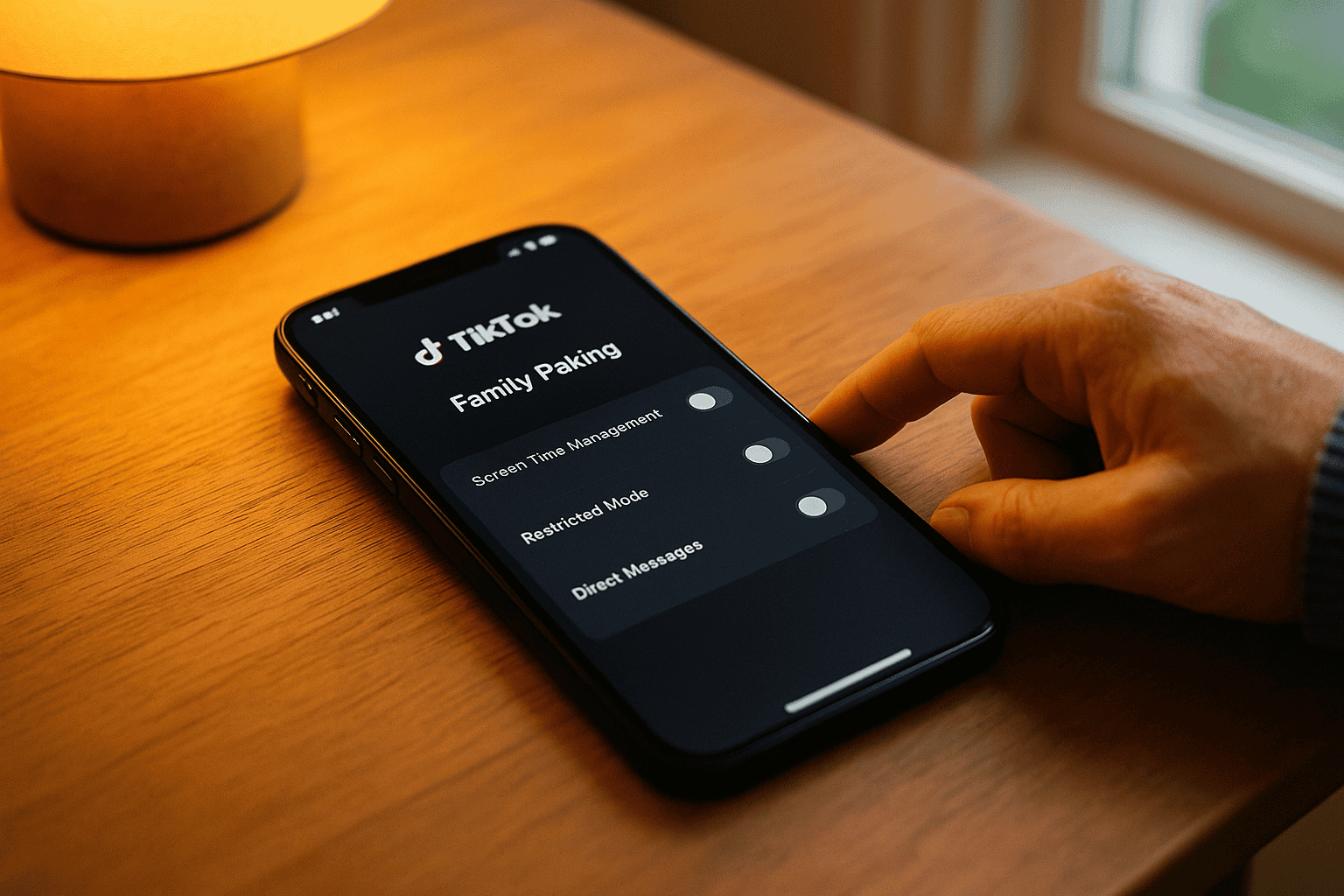
- Enable Family Pairing. Links your account to your teen's and unlocks parent-side controls for screen time, restricted mode, and DMs.
- Restrict DMs to Mutual Follows or Off entirely. Closes the primary Social-Layer vector.
- Turn on Restricted Mode. Filters some Content-Layer material; imperfect but worth running.
- Set a daily Screen Time Limit. Algorithm-Layer exposure matters; capping it limits narrowing speed.
- Use the "Refresh your For You feed" option together. Most consequential underused control.
- Set Comment filters to Friends or Hide. Reduces harassment surface.
- Turn off "Suggest your account to others." Reduces stranger discovery.
- Turn on sensitive-content filters where available. Especially eating-disorder and self-harm categories.
Is TikTok safe for kids at 13, 15, and 17?
The readiness question \u2014 whether your kid should be on TikTok at all \u2014 is the sibling piece's job; see the readiness test for TikTok. The safety-calibration version once readiness is settled: at 13, the Day-1 Lockdown plus weekly FYP check-ins together are the floor; at 15, Family Pairing can ease back but Algorithm Resets remain a useful household practice; at 17, controls shift toward conversational rather than configurational, with the goal that they leave for college able to manage their own algorithm awareness. For the broader framework, see the readiness test that isn't about age and the platform siblings for Instagram and Snapchat.
What TikTok does well
An honest answer to is TikTok safe for kids includes the upside. TikTok at its best is creative expression, micro-learning, peer humor, and niche-community discovery. Plenty of teens use it that way without significant harm, particularly those whose algorithmic exposure stays inside benign interest categories. The platform is not uniquely evil; it is uniquely fast at narrowing. The structural question is whether the controls calibrate the narrowing toward useful outcomes rather than vulnerable ones.
Pause & apply: Which of the three layers is your primary TikTok concern actually in? Algorithm-Layer (FYP, narrowing, body image) \u2014 controls are time limits and Algorithm Resets. Content-Layer (specific videos, filters, challenges) \u2014 Algorithm-Layer controls plus Restricted Mode. Social-Layer (DMs, comments, strangers) \u2014 the Day-1 Lockdown handles it almost completely. Naming the layer changes the response.
Is TikTok safe for kids? Where this leaves you
The structural answer: calibrated yes, with the three layers locked down deliberately. Is TikTok safe for kids whose Algorithm Layer is bounded by time limits and periodic resets, Content Layer filtered, and Social Layer closed via Family Pairing and DM restrictions? Yes. It is not safe by default; TikTok's defaults are a starting floor. Compare with the parallel three-layer answer for Roblox; for the adjacent tracking question, see the trade-off nobody names about tracking your teen. Run the Day-1 Lockdown, schedule an Algorithm Reset every 60 days, and revisit each developmental quarter.

Ethan Cole is a contributing writer for The Daily Well covering parenting technology, screen-time culture, family systems, and modern household organization. His background includes graduate work in business and finance, along with experience in operations, consulting, and technology systems architecture.
His work focuses on reducing real-world friction for busy families navigating modern life, with a particular interest in digital overwhelm, technology habits, productivity systems, and the intersection between modern parenting and everyday technology.



