
You send your five-year-old to the corner for the third time today, and instead of reflection, you get kicking, screaming, or worse—total indifference. When time-outs stop working, it’s not because your child is broken or because you’re doing it wrong. It’s because the tool has outlived its usefulness for your child’s developmental stage, temperament, or the specific behavior you’re trying to address.
The good news? When time-outs stop working, it’s often a signal that your child is ready for something more sophisticated. This article is part of our broader guide to child development, where we explore how discipline strategies evolve alongside cognitive and emotional growth. Here’s what to try instead, organized by age and grounded in what actually works in real families.
The Mismatch Problem
Key Insight: Time-outs stop working when there’s a developmental mismatch between the tool and the child’s current capacity for self-regulation.
A time-out assumes the child can (1) connect the consequence to the behavior, (2) calm themselves without co-regulation, and (3) generate insight during isolation. But toddlers lack impulse control, school-age kids crave connection during distress, and tweens need autonomy, not isolation. When the tool doesn’t match the need, compliance disappears.
- Toddlers (18 months–3 years): Can’t yet self-regulate or hold behavioral rules in memory during emotional arousal
- Preschoolers (3–5 years): Need co-regulation more than isolation; shame can override learning
- School-age (6–10 years): Require logical consequences tied to the specific behavior, not generic punishment
- Tweens (11–13 years): Perceive time-outs as infantilizing; need collaborative problem-solving to preserve dignity
The alternative isn’t permissiveness—it’s precision. Match the intervention to the developmental stage, and you’ll see faster behavior change with less power struggle.
What to Try Instead for Toddlers (18 Months to 3 Years) When Time-Outs Stop Working

Toddlers don’t have the prefrontal cortex development to sit quietly and “think about what they did.” When time-outs stop working at this age, it’s because isolation triggers panic, not reflection. According to Zero to Three’s guidance on time-outs and young children, toddlers need adults to help them calm down, not to be left alone with big feelings they can’t yet name.
Instead, try time-ins—sitting with your toddler in a calm corner of the room, narrating their emotions without lecturing. “You’re so mad the block tower fell. It’s hard when things don’t work.” This teaches emotional literacy in real time. Pair it with redirection: if they’re throwing toys, hand them a soft ball and say, “We throw this one, not that one.” The limit is still there, but the learning happens through connection, not isolation.
Physically removing a toddler from danger or conflict is still necessary—just don’t call it a time-out. Call it a reset. Scoop them up, move to a quieter space, and stay with them. When they’re calm, return to the activity with a simple boundary: “Gentle hands with the dog.” Repeat as needed. Toddlers learn through repetition and co-regulation, not through consequences they can’t yet conceptualize. For more on navigating toddler defiance, see our article on when your child doesn’t listen and time-outs don’t work.
What to Try Instead for Preschoolers (3 to 5 Years) When Time-Outs Stop Working
Preschoolers have more language than toddlers but still struggle with emotional regulation. When time-outs stop working at this age, it’s often because the child feels ashamed or disconnected rather than reflective. Research from the Child Mind Institute on the pros and cons of time-outs shows that preschoolers respond better to consequences that preserve the parent-child relationship while still enforcing limits.
Try limited choices that give your preschooler a sense of control within your boundaries. “You can’t hit your brother. You can choose: take three deep breaths with me, or we can go to your room together and read a book until you’re ready to come back.” Both options involve co-regulation, but the child gets to choose the path. This reduces power struggles while teaching that behavior has consequences tied to repair, not punishment.
Another effective strategy: do-overs. When your preschooler grabs a toy from a sibling, don’t send them to time-out—ask them to try again. “Let’s rewind. How can you ask for the toy with words?” Then coach them through it. This approach, rooted in the UNICEF framework for positive discipline, teaches the skill in the moment, rather than punishing the gap where the skill should be. When time-outs stop working for preschoolers, it’s often because the child doesn’t yet have the replacement behavior—your job is to teach it, not just enforce a consequence.
What to Try Instead for School-Age Kids (6 to 10 Years) When Time-Outs Stop Working

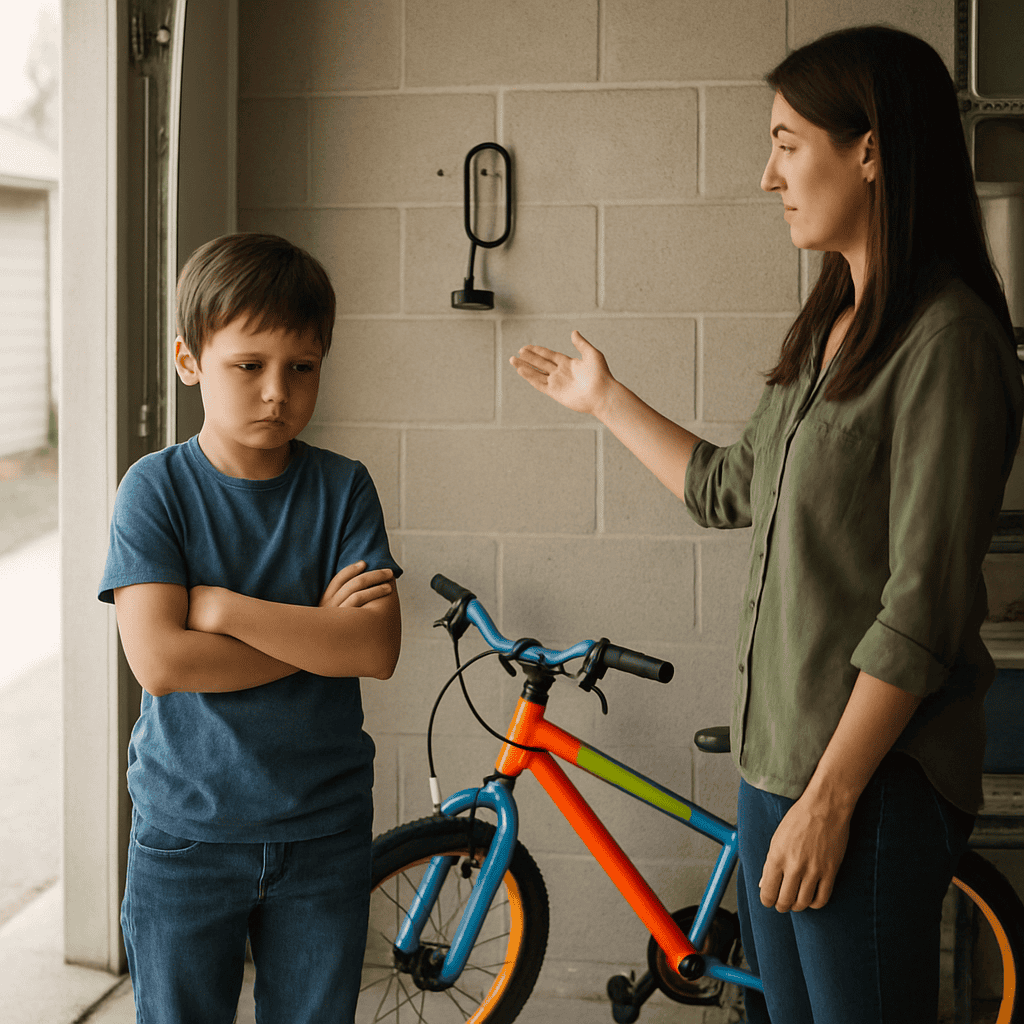
School-age children understand rules and consequences, but when time-outs stop working, it’s usually because the consequence feels arbitrary. A six-year-old sent to their room for leaving their backpack in the hallway learns nothing about responsibility—they learn that you’re mad. At this age, kids need logical consequences that mirror real-world cause and effect.
If your child refuses to put their bike away, the bike gets locked in the garage for two days. If they don’t bring their lunch to the car in time, they eat what’s in the school cafeteria (not a backup lunch you scramble to make). These aren’t punishments—they’re natural outcomes that teach planning, memory, and accountability. When time-outs stop working, it’s often because your child’s brain is ready for consequences that connect directly to the behavior, not generic isolation.
For emotionally charged behaviors—sibling conflict, defiance, meltdowns—try reflective conversation after calm. Don’t lecture in the heat of the moment. Wait until everyone is regulated, then ask, “What happened right before you got so angry?” and “What could we try differently next time?” This approach, supported by the American College of Pediatricians’ overview of child discipline, builds problem-solving skills rather than compliance through fear. School-age kids want to be seen as capable—give them the chance to co-create the solution, and you’ll see more buy-in than any time-out could produce. Explore more on managing persistent defiance in our guide on why kids struggle to shift gears.
What to Try Instead for Tweens (11 to 13 Years) When Time-Outs Stop Working
By the tween years, time-outs are developmentally inappropriate. A twelve-year-old sent to their room will scroll on a hidden device, stew in resentment, or simply shut you out. When time-outs stop working with tweens, it’s because the tool infantilizes them. Tweens need consequences that respect their growing autonomy while still holding firm boundaries.
Try collaborative problem-solving. When your tween breaks a rule—missed curfew, incomplete chores, disrespectful tone—schedule a calm conversation (not in the heat of the moment) and say, “This isn’t working. What do you think a fair consequence would be?” Let them propose it. You can negotiate from there, but starting with their input shifts the dynamic from authoritarian to authoritative. Tweens are far more likely to follow through on consequences they helped design.
For repeated issues, implement privilege-based consequences tied to trust. If your tween lies about screen time, screen time becomes earned back in small increments with transparency. If they blow off homework, weekend plans are paused until the work is complete. These aren’t arbitrary—they’re directly tied to the skill or behavior that needs rebuilding. When time-outs stop working for tweens, it’s because your child’s developmental stage demands respect, responsibility, and logical connection between behavior and outcome. Removing those elements guarantees defiance.
For more on navigating tween autonomy and boundaries, see our article on the privacy conversation every tween deserves and our guide to smartwatch vs phone decisions for this age.
Frequently Asked Questions

Lena Carter is a contributing writer for The Daily Well, focusing on practical routines, family systems, and everyday strategies for modern households. With experience managing the demands of a busy home and balancing the realities of modern family life, her work centers on simple, sustainable approaches that reduce stress and create more stability in the day-to-day.
Her writing explores parenting routines, household organization, emotional overwhelm, and the small systems that help families function more smoothly in real life — not just in theory.



