When both parents work, school mornings can become a scramble. Between getting children dressed, preparing breakfast, packing bags, and leaving for work, one unexpected delay can disrupt everyone’s schedule.
A practical morning routine for two working parents starts with clear responsibilities. Decide who handles each task, coordinate departure times, and prepare essentials the night before. Neither parent should automatically become responsible for everything involving the children.
This guide explains how to organize a two-earner household morning routine that reduces delays, shares responsibilities fairly, and works even when plans change. For broader daily planning, explore our family routines guide.
The Parallel Capacity Model
Key Insight: A morning routine for two working parents should minimize tasks that require one parent to finish before the other can begin.
The Parallel Capacity Model divides morning responsibilities into two independent lanes. Each parent owns specific tasks or a child’s complete morning routine, reducing last-minute handoffs and scheduling conflicts.
Real-world example: Parent A handles the older child’s breakfast, dressing, and backpack. Parent B handles the younger child’s morning preparation. Bathroom and kitchen use are staggered to prevent delays.
- Assign ownership: Decide responsibilities the night before, based on each parent’s schedule.
- Remove bottlenecks: Organize bags, lunches, keys, and clothing before bedtime.
- Limit dependencies: Avoid tasks where one parent must wait for the other.
- Plan for disruptions: Establish who handles unexpected problems without derailing both schedules.
Try it for three mornings: Record where delays occur and whether one parent’s tasks interrupt the other’s. Adjust the assignments to eliminate recurring conflicts.
The goal: Two predictable morning routines that work together without requiring constant coordination.
Why Standard Morning Routines Fail in Two-Earner Households
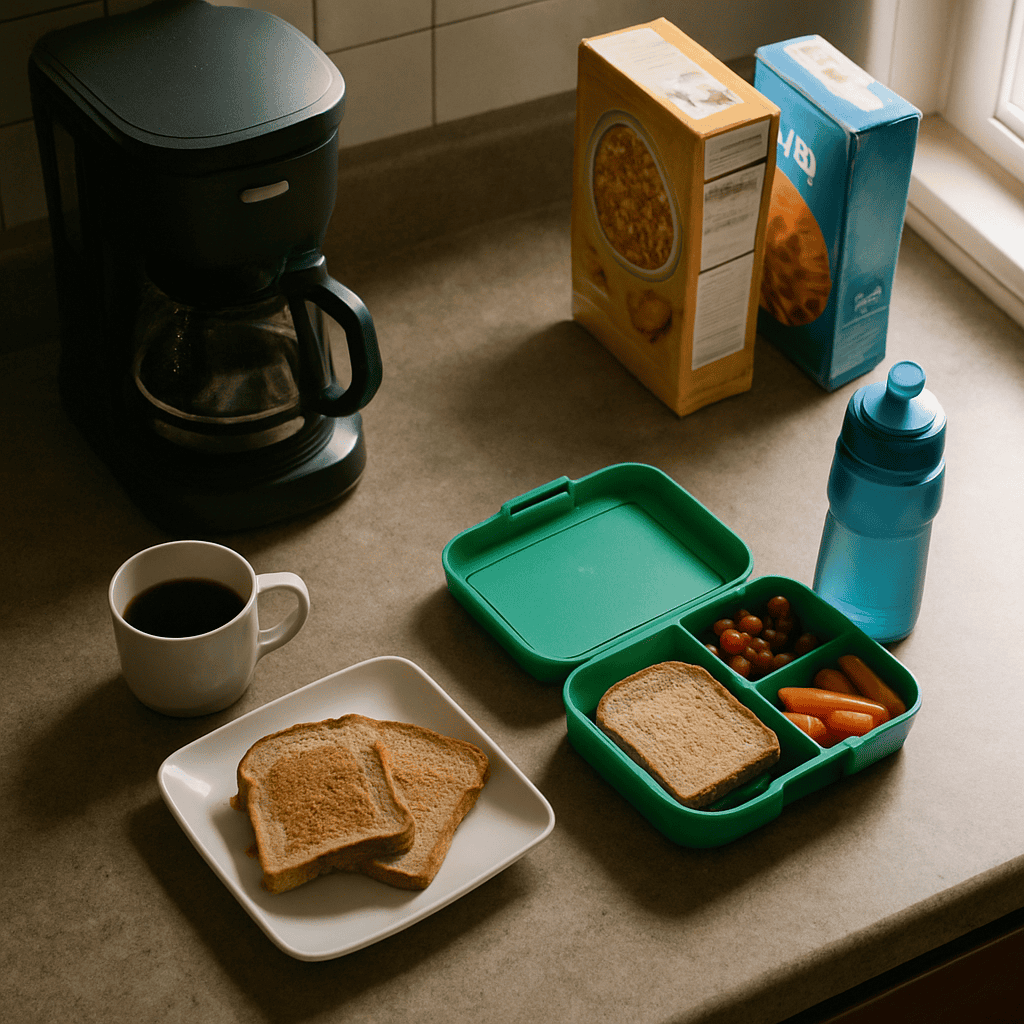
Traditional family morning routines often assume one parent has flexibility to handle unexpected delays. When both parents have fixed work schedules, that flexibility may disappear.
The biggest problem is often sequential handoffs: one parent prepares breakfast while the other gets ready for work, then they switch responsibilities. If either task runs late, both schedules suffer.
Identify Your Morning Bottlenecks
Consider a household where one parent leaves at 7:15 a.m. and the other at 7:45. A forgotten homework assignment at 7:10 can disrupt both departures if responsibilities aren’t clear.
To prevent this:
- Identify tasks that require one parent to wait for the other.
- Assign responsibilities according to actual departure times.
- Prepare school supplies and work essentials the night before.
- Give each parent a backup plan for unexpected delays.
Practical test: For three mornings, record every time one parent must stop their own preparation to finish another person’s task. Those interruptions reveal where your routine needs adjustment.
The Two-Lane Assignment Model for Dual-Income Family Morning Routines
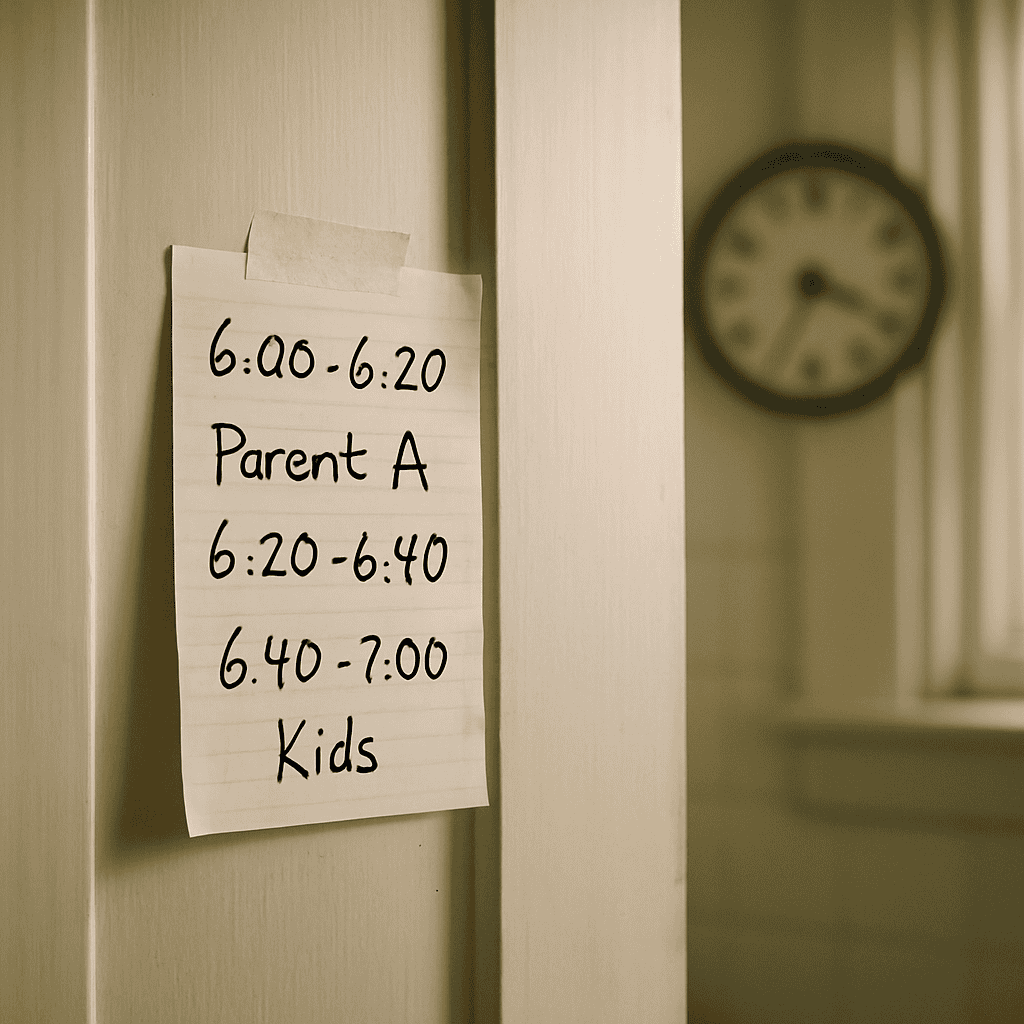
When both parents work, dividing morning responsibilities clearly prevents last-minute confusion. The Two-Lane Assignment Model gives each parent ownership of specific tasks based on their schedules.
Example: Two Working Parents, Two Children
Parent A (leaves at 7:15 a.m.):
- Wakes and prepares the older child.
- Supervises dressing and hygiene.
- Handles the early school departure.
Parent B (leaves at 8:00 a.m.):
- Prepares the younger child.
- Handles breakfast and remaining school supplies.
- Manages the later departure.
What If You Have Only One Child?
Divide responsibilities by function instead:
- Parent A: Wake-up, clothing, and hygiene.
- Parent B: Breakfast, backpack, and transportation.
Choose assignments based on departure times, availability, and each child’s needs.
Try this: Write both parents’ responsibilities on a two-column chart. Include departure deadlines and a designated backup for unexpected delays.
Review the assignments after one week and adjust anything that consistently creates conflicts.
Prevent Morning Bottlenecks When Both Parents Work

Even with clearly assigned responsibilities, two working parents can lose valuable time competing for the bathroom, kitchen, or front door.
The solution is to stagger shared resources, rather than simply telling everyone to move faster.
Three Common Morning Bottlenecks
- Bathroom: Assign realistic time windows. For example, Parent A uses the bathroom from 6:15–6:30, followed by Parent B from 6:30–6:45.
- Kitchen: Prepare lunches and breakfast supplies the night before. Assign one parent to breakfast while the other handles dressing.
- Departure: Keep backpacks, shoes, keys, and coats in designated locations. Avoid scheduling both departures at exactly the same time unless necessary.
The Two-Minute Test
For three mornings, note whenever someone waits more than two minutes for a shared space, item, or another family member.
If the same delay occurs repeatedly, adjust the schedule or move the task elsewhere.
The goal is to eliminate unnecessary waiting without making your morning routine more complicated.
Backup Plans When One Parent’s Lane Fails
Even the best morning routine for two working parents needs a backup plan. Sick children, unexpected meetings, and transportation problems can disrupt both schedules.
The solution is to agree on responsibilities before emergencies happen.
Create a Three-Level Backup Plan
- Minor delay (5–10 minutes): The unaffected parent continues their assigned tasks. Avoid disrupting both schedules.
- Major delay: Decide which parent has greater work flexibility and who can handle additional responsibilities.
- Emergency: Contact a prearranged caregiver, activate a carpool arrangement, or notify employers that plans must change.
Put the Agreement in Writing
For example: “If Parent A cannot handle school drop-off, Parent B covers transportation when available. Otherwise, we contact our backup caregiver.”
Keep emergency contacts and school attendance procedures accessible to both parents.
Review the plan whenever work schedules or childcare arrangements change.
Evening Prep That Makes the Two-Earner Household Morning Routine Possible
When both parents have fixed departure times, preparing the night before reduces last-minute decisions and prevents avoidable delays.
The 15-Minute Evening Reset
Divide preparation between parents so neither carries the entire workload.
- Minutes 1–5: Children’s essentials. Pack backpacks, check homework, select outfits, and organize shoes.
- Minutes 6–10: Breakfast and lunches. Prepare food, fill water bottles, and refrigerate anything needed tomorrow.
- Minutes 11–15: Parent coordination. Confirm work schedules, school drop-offs, departure times, and any changes to responsibilities.
The Two-Minute Schedule Check
Before bed, each parent answers three questions:
- What time must I leave tomorrow?
- Which children and tasks am I responsible for?
- Is anything different from our usual schedule?
Older children can help prepare their own belongings using independent morning habits.
The goal: Everyone starts the morning knowing what needs to happen and who’s responsible.
Frequently Asked Questions
How do two working parents manage school mornings?
How should working parents divide morning responsibilities?
What if both parents leave for work at the same time?
How early should working parents wake up?
What happens when one parent has an unexpected work conflict?
Can a two-parent morning routine work with one child?

Lena Carter is a contributing writer for The Daily Well, focusing on practical routines, family systems, and everyday strategies for modern households. With experience managing the demands of a busy home and balancing the realities of modern family life, her work centers on simple, sustainable approaches that reduce stress and create more stability in the day-to-day.
Her writing explores parenting routines, household organization, emotional overwhelm, and the small systems that help families function more smoothly in real life — not just in theory.