Your first-grader drags himself through the door, drops his backpack mid-floor, and dissolves into tears over untied shoelaces. Your fifth-grader bursts in talking nonstop, bouncing from snack to piano bench to trampoline. Your middle schooler goes silent, headphones on, door closed. Three children, three wildly different responses to the same moment — coming home after school. The mismatch isn’t behavioral; it’s temperamental. And the after-school decompression activities that work for one can escalate meltdown risk for another.
This article is part of our broader guide to Family Routines. This is the practical companion to understanding after-school restraint collapse, a phenomenon documented across child development literature in which children who hold themselves together all day at school release pent-up stress the moment they reach their safe zone. But what that release looks like — and what helps a child move through it — depends heavily on individual temperament. Most families try to apply a one-size-fits-all approach: snack, homework, play. But research on temperament types suggests after-school decompression activities must match the child’s regulatory style, sensory threshold, and social recharge mechanism.
The Temperament Mismatch Framework
Key Insight: Decompression isn’t about calming every child down — it’s about matching the activity to their regulatory style so they can return to baseline without forced suppression.
When after-school decompression activities conflict with a child’s natural regulatory pattern, you don’t get calm — you get escalation, resistance, or shutdown. An extroverted high-energy child sent to “quiet time after school” may become more dysregulated because they need movement to process. An introverted sensory-sensitive child pushed into a playdate may melt down because social demand is the stressor they just escaped. The goal is regulatory match, not universal quiet.
- High-energy kids often need physical discharge before they can settle
- Introverted or sensory-sensitive kids need solitude and low stimulation to decompress after school
- Socially motivated kids recharge through connection, not isolation
- Kids with executive function challenges need external structure during the decompression window
The after-school decompression activities you choose should feel like relief to the child, not another demand. If your child resists the routine, the mismatch is the message.
After-School Decompression Activities for the High-Energy, Movement-Seeking Child

These are the kids who arrive home wound tight — talking fast, moving constantly, unable to sit still for a snack. Child Mind Institute’s research on transition difficulty notes that children with high sensory thresholds often need intense physical input to regulate. Asking them to sit quietly is neurologically out of sync with their needs. After-school decompression activities for this temperament type should front-load movement.
Outdoor free play — unstructured, parent-free — is the gold standard. A fenced yard, a driveway with a basketball hoop, or a greenway loop gives these kids the autonomy to run, climb, or shoot hoops without adult commentary. Avoid structured sports practice immediately after school; the performance demand adds stress rather than relieving it. One middle school parent in our reporting described her son’s routine: he drops his bag, grabs his skateboard, and does laps in the cul-de-sac for twenty minutes. No conversation, no questions. When he comes in, he’s ready to engage.
Indoor alternatives include a mini trampoline, a pull-up bar, a basement with space to tumble, or a sensory swing. Some families install a punching bag. The key is that the activity is non-social, self-directed, and intense enough to provide proprioceptive feedback. After-school decompression activities for high-energy kids should not involve screens during this window — the vestibular system needs real movement, not virtual stimulation.
After-School Decompression Activities for the Introverted, Sensory-Sensitive Child

These children walk in the door and immediately seek refuge — under a blanket, in their room, curled up with a stuffed animal. They may cry at small provocations, snap at siblings, or go nonverbal. Child Mind Institute’s guidance on meltdowns emphasizes that for sensory-sensitive children, the meltdown is often a response to cumulative overstimulation, not a single trigger. After-school decompression activities for this group must prioritize solitude, quiet, and low sensory load.
Quiet time after school — truly alone, no sibling intrusion, no parent check-ins — is non-negotiable for these kids. One elementary teacher and mother of three told us her introverted daughter needs thirty minutes in her room with the door closed, lights dim, often under a weighted blanket, before she can tolerate conversation. She’s not punished; she’s regulating. The family rule is that no one knocks unless it’s an emergency. When she emerges, she’s herself again.
Other effective after-school decompression activities for this temperament: audiobooks with eyes closed, drawing or coloring alone, building with LEGO in silence, a warm bath, or simply lying on the couch with a pet. These children decompress after school by reducing input, not by engaging with it. Parents often misread this withdrawal as sadness or antisocial behavior, but for introverted children, solitude is how they metabolize the day. Forcing conversation or insisting on a snack together can prolong dysregulation.
One critical note: if your child requests screen time during this window, be discerning. Passive screen use (watching a familiar show) can work for some introverted kids as a low-demand sensory buffer. But interactive or stimulating content (video games, YouTube rabbit holes) often delays true decompression rather than facilitating it.
After-School Decompression Activities for the Socially Motivated Child
Not every child needs to decompress after school in silence. Some children are energized by connection and become dysregulated when isolated. These are the kids who walk in the door and immediately want to tell you everything, play a board game, bake cookies together, or FaceTime a friend. Their version of restraint collapse is often emotional flood — they need to narrate, process aloud, co-regulate through relationship.
After-school decompression activities for socially motivated children should provide low-demand connection. This is not interrogation (“How was your day? What did you learn?”) but presence. Folding laundry together while they talk. A walking loop around the block, side by side. Shooting baskets in the driveway while they tell you about lunch drama. The parent’s role is to be available, responsive, and non-directive. One father described making after-school snack prep a ritual: his daughter sits on the counter, he chops vegetables, and she talks. He listens but doesn’t probe.
Sibling play can also serve as after-school decompression activities for this temperament type — as long as it’s cooperative, not competitive. Collaborative building, pretend play, or even helping a younger sibling with a puzzle can help the socially motivated child process their day. Conflict-prone sibling dynamics, however, are the opposite of decompression. If your children tend to escalate when together immediately after school, stagger their decompression windows or provide separate spaces first.
For older kids, this might look like texting a friend, a quick call, or a planned hangout once or twice a week. The key is that social connection is the regulatory mechanism, not a reward that comes after regulation. Telling a socially motivated child to “go decompress alone first” can feel punishing and delay their ability to settle.
After-School Decompression Activities for the Child with Executive Function or Sensory Processing Challenges
Some children don’t have a clear regulatory style — they seem to need everything and nothing all at once. They’re overstimulated but bored, tired but wired, hungry but refuse food. These children often have underlying executive function weaknesses, sensory processing differences, or attention regulation challenges. After-school decompression activities for this group require more external scaffolding because the child can’t reliably identify or communicate their own needs.
Start with a sensory reset: a predictable, repeated sequence that addresses multiple sensory channels. One occupational therapist we spoke with recommends a “sensory circuit” immediately upon arriving home: five minutes of heavy work (carrying groceries, pushing a laundry basket, wall push-ups), then a drink of cold water through a straw (oral motor input), then ten minutes of a chosen quiet activity. The sequence is the same every day. The predictability reduces decision fatigue; the sensory input addresses the physiological dysregulation underlying the behavioral chaos.
Visual schedules help these children decompress after school by externalizing the plan. A laminated checklist with icons: shoes off, backpack on hook, sensory circuit, snack, choice time. The child doesn’t have to hold the sequence in working memory; the chart holds it. This is not rigid control — it’s cognitive offloading during a high-demand window. Many families find that once the routine is established, the meltdowns decrease sharply because the child isn’t navigating ambiguity while already depleted.
After-school decompression activities for these kids should also limit choices. “What do you want for snack?” can trigger a meltdown. Two options, pre-selected, work better. Same with activity choice: “Would you like to build or draw?” not “What do you want to do?” The fewer decisions the child has to make during the decompression window, the faster they regulate.
After-School Decompression Activities for Mixed Households: Sibling Logistics
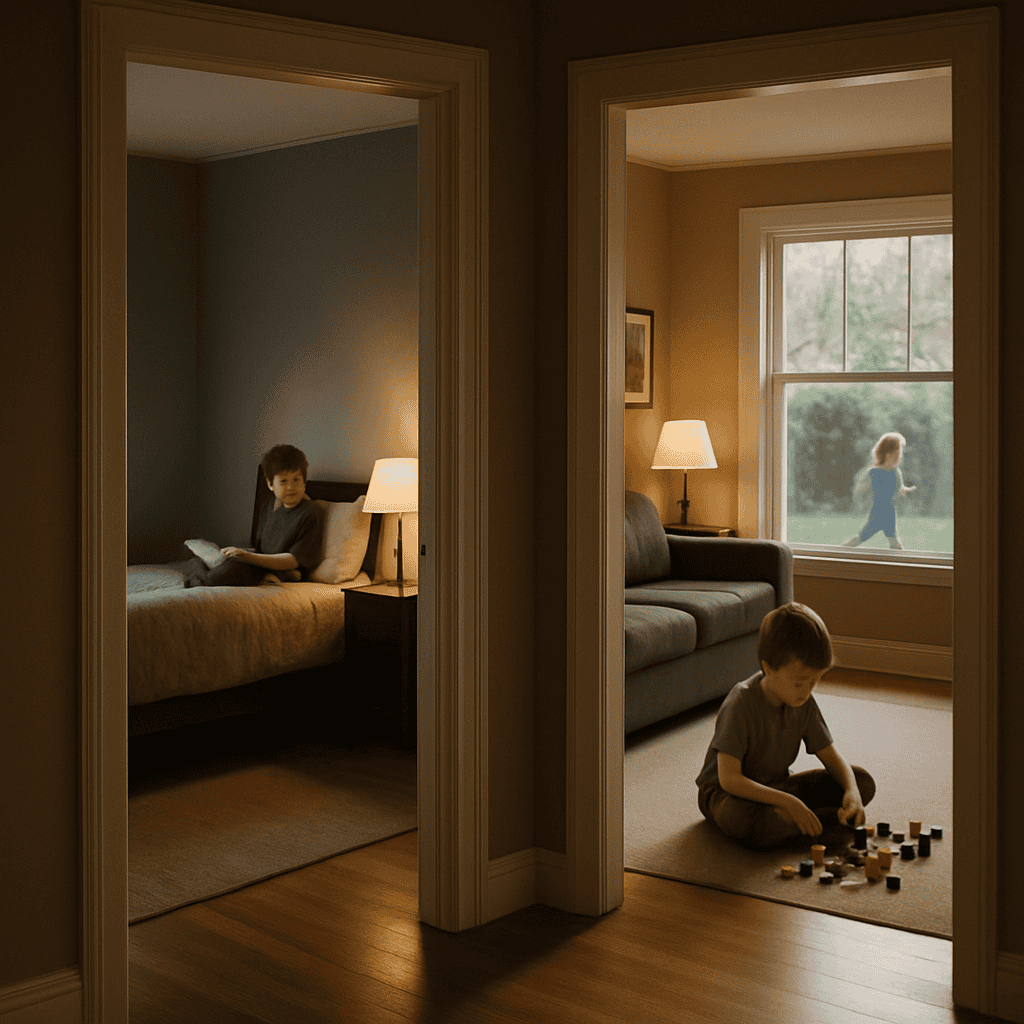
Most families don’t have the luxury of a single temperament. One child needs to run laps; another needs silence; a third needs your undivided attention. After-school decompression activities in multi-child households require zoning and sequencing — not equal treatment, but equitable support. The goal is that each child gets what they need, even if that looks wildly different.
Physical zoning works well. The high-energy child goes outside or to the basement. The introverted child gets the bedroom with the door closed. The socially motivated child has access to you in the kitchen. These zones are not punishment; they’re infrastructure. One mother of four described her system: “Everyone has a decompression zone. You go to yours for twenty minutes. No one interrupts anyone. Then we reconvene for snack.” She set a timer. The predictability reduced sibling conflict because no one felt shortchanged.
Sequencing also helps when space is limited. If you have one child who needs you and one who needs solitude, give the introverted child their quiet time first while you’re managing the high-energy child outside. Then swap: bring the high-energy child in for independent play while you sit with the socially motivated one. This isn’t perfect, but it’s functional. The mistake many parents make is trying to meet all needs simultaneously, which satisfies no one and escalates everyone.
After-school decompression activities in mixed households also benefit from teaching children to name their own needs. “I need to move,” “I need quiet,” “I need to talk” become household vocabulary. Over time, older children learn to advocate for their own regulatory needs rather than waiting for a parent to orchestrate. This is not parentification — it’s developmentally appropriate self-awareness.
Frequently Asked Questions

The Daily Well Team creates practical, research-backed content focused on modern parenting advice, wellness tips for moms, and everyday strategies for real families. We cover routines, child development, family systems, and smart lifestyle solutions that help busy households reduce stress and function more effectively. Our editorial approach is grounded in clarity, simplicity, and real-world results.