
Digital Parenting Hub – Real World Tips & Advice
There is a version of digital family life that runs on clear rules, calm transitions, and a kid who hands over the iPad without negotiation. Most of us have tried to build it. Most of us have watched it dissolve somewhere around the second time we said “five more minutes.” The Daily Well exists for the space between the influencer version of digital parenting and the real one — the version that accounts for the Roblox session that won’t end, the group chat that keeps pinging at 9 pm, and the morning that quietly begins on YouTube before anyone has eaten breakfast. What follows is a practical map of the digital parenting frameworks that actually hold. Not because they are perfect — because they are built for your actual house.

Digital parenting works best when it reduces daily friction instead of adding rules. Predictable transitions, clear platform expectations, and a household tech culture that holds on hard days help children know what to expect while giving parents a more stable framework to work from during busy weeks. The goal is not a screen-free household. The goal is building sustainable approaches that still function when life gets messy.
On This Page
Explore practical digital parenting frameworks covering screens, attention, and transitions, the platforms kids actually use, online safety and social media, and decisions around phones, devices, and independence — designed to help families build calmer, more sustainable tech habits.
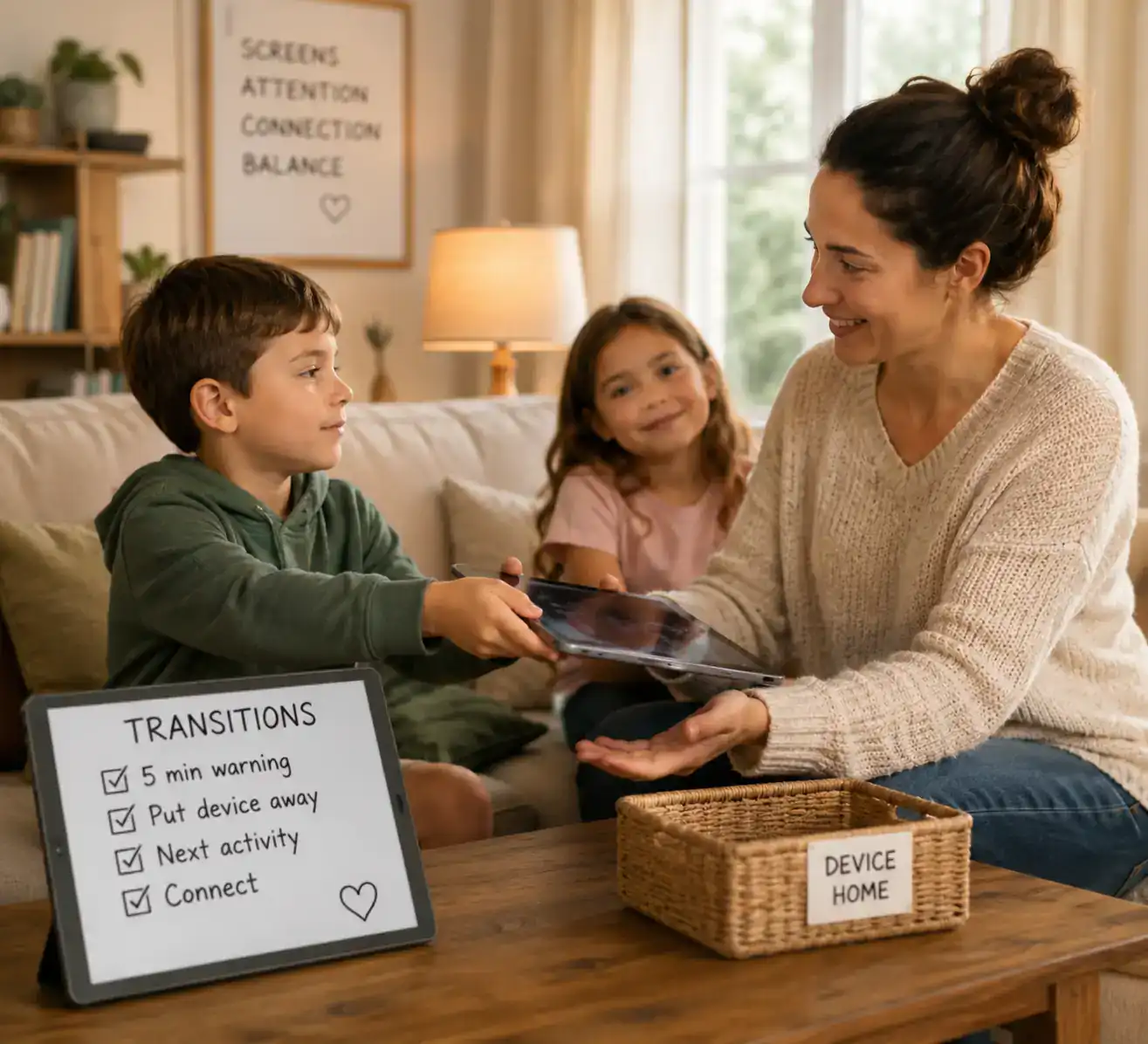


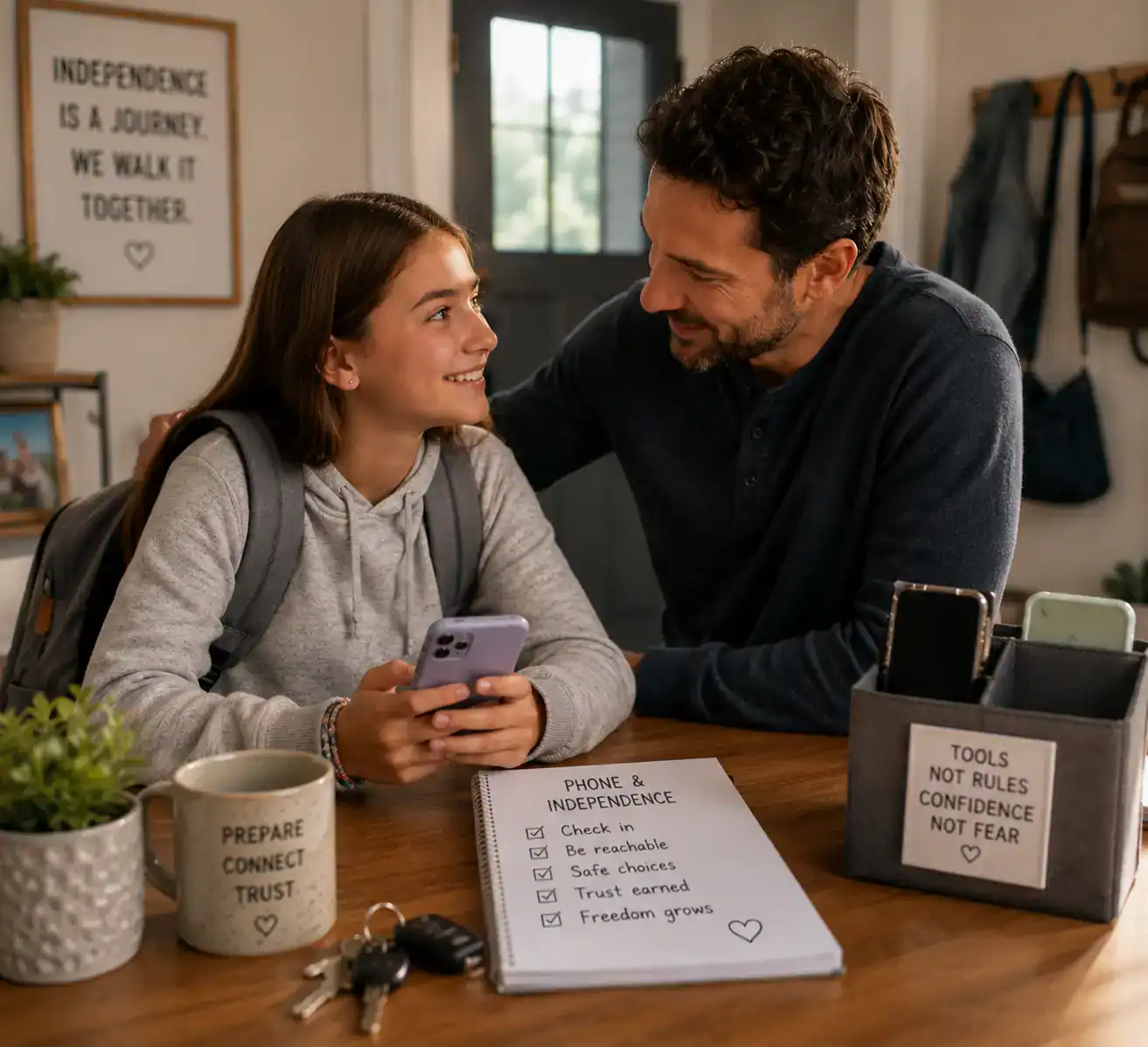
Practical Digital Parenting for Real Life

The modern reality: Modern parenting often feels less like running a household and more like managing constant tech transitions, notifications, group chats, gaming meltdowns, and screen-time negotiations that arrive before breakfast and stretch past bedtime. Digital parenting is the new paradigm. Most families are not struggling because they are doing it wrong, or because they are inconsistent, or because they failed to find the right app. They are operating inside an environment engineered to fragment attention, escalate stimulation, and turn every transition off a device into a small daily negotiation.
Why predictable digital structure matters: That is why predictable digital structure matters. Children tend to feel more regulated when devices have a known place in the day, transitions on and off screens follow a familiar pattern, and the volume of repeated verbal correction drops. From the after-school crash that follows two hours of gaming to the bedtime conflict that begins the moment YouTube cuts off, small systems applied consistently usually produce more calm than dramatic restrictions or screen-free experiments.
The Daily Well’s Digital Parenting hub focuses on frameworks that real households can actually maintain. Instead of fear-based warnings or perfection-based rules nobody can follow on a Tuesday, the goal is calmer transitions, better attention, healthier platform use, and decisions parents can live with after a long week. These are not screen-free fantasies — they are sustainable approaches built around the real friction points of a hyperconnected family.

Practical Digital Parenting for Families
Digital parenting works best when it supports real life, not perfection. From calmer transitions on and off screens to better platform decisions and less reactive social-media conversations, our practical frameworks are designed to help modern families build sustainable, intelligent tech habits that hold through normal weeks — not just calm ones.
Explore Digital parenting
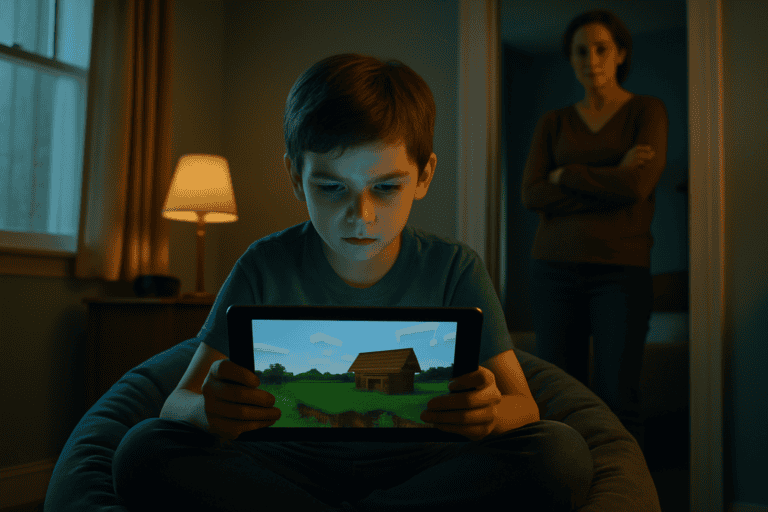
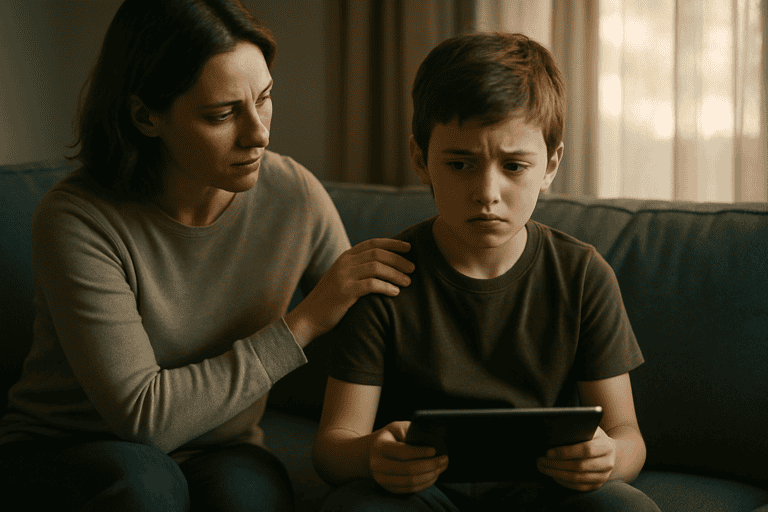
Editorial Snapshot
Today’s Digital Insight
Most family tech rules fail because they are designed for the moment the device goes on, not the moment it comes off. The hardest part of screen time is almost never the screen time itself.
Transition Friction: Why the Hardest Part of Screen Time Isn’t the Screen Time →
A practical look at the moment family tech rules actually break — the transition off the device — and why most screen-time advice misses where the conflict really lives.
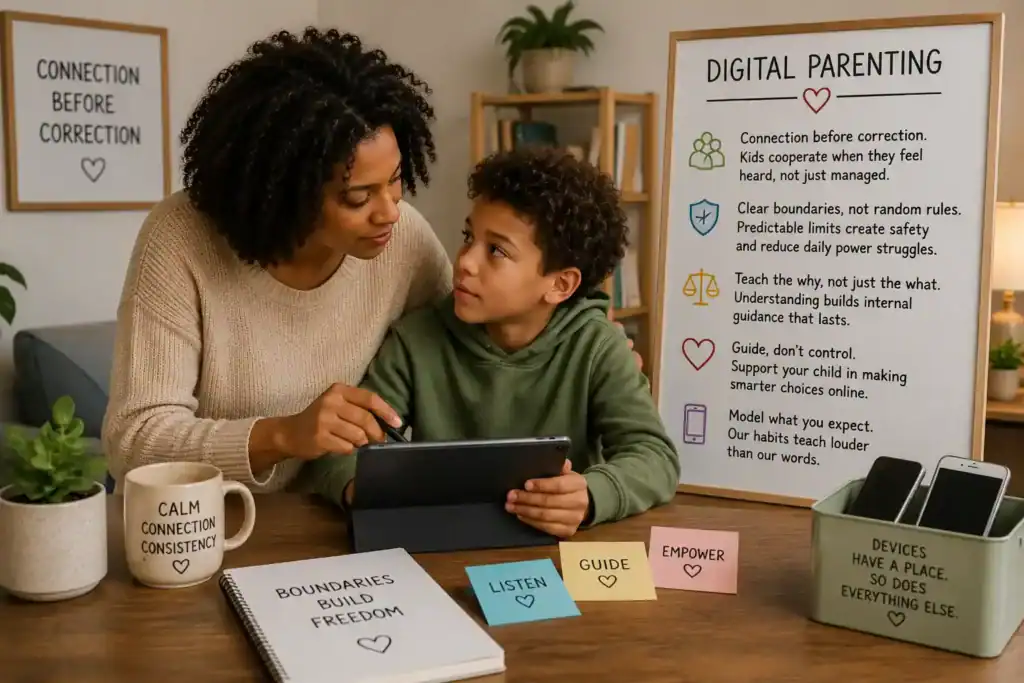
Why Digital Parenting Rules Fail — and What Actually Works
Most family tech rules do not fail because parents are inconsistent or doing something wrong. They fail because modern households operate inside environments engineered to fragment attention, escalate stimulation, and make the moment of stepping off a device feel — to a child — like a small personal injury. The breakdown is structural, not behavioral, and no amount of trying harder will fix something that was built to fall apart.
An approach that actually works has to support the real friction points: the after-school decompression, the homework-versus-YouTube negotiation, the bedtime device handoff, the group chat that keeps pinging during dinner. The most effective approaches are rarely the most restrictive ones. They are the ones a child can predict and a parent can realistically enforce on a Wednesday, when energy is low and the family is operating on its last reserves.
Many parents try to overhaul everything at once with bans, lockdowns, or one-size-fits-all rules borrowed from a podcast. Approaches that survive the long haul are usually flexible enough to handle slip-ups, inconsistent co-parenting, and the unpredictable reality of raising a child who already uses technology more fluently than the adults around them. Rigid systems break first; honest, adaptable ones bend without snapping.
Strong digital parenting is built around transitions and attention, not around fear. Children tend to do better when they know where devices fit in the day and where they do not, when the moments of going on and off a screen follow a familiar pattern, and when the rules they live with feel reasonable rather than reactive. Predictable rhythms reduce conflict, support independence, and lower the volume of constant correction that families slip into when tech becomes the daily battle.
The goal is not a screen-free household — that fantasy belongs to a different decade. The goal is calmer transitions, better platform decisions, healthier social-media conversations, and a household tech culture parents can actually live with after a long week.
Screens, Attention, & Transitions
The daily rhythm of devices — the moment screens go on, the moment they come off, the cognitive residue that lingers after attention has been somewhere else for an hour — is where most family tech conflict actually lives. It’s one of the most challenging aspects of digital parenting. Predictable structure around those transitions can lower the temperature of an entire household without restricting a single minute of screen time. The fight is usually not about the device — it is about the gradient on either side of it.
The most useful concept here is Transition Friction — the cost, in attention and emotion, of moving between high-stimulation and low-stimulation activities. Pediatric guidance has been quietly shifting in this direction for years, with organizations like the American Academy of Pediatrics increasingly emphasizing the patterns around screen use rather than the raw minute count. Over time, smarter transitions tend to matter more than stricter limits.
Screen-time approaches often break down when families try to fix everything at once. Too many rules across too many devices, inconsistent enforcement between caregivers, and the gap between weekday and weekend habits can produce friction before anyone has actually broken a rule — and younger children usually need visible cues and short, predictable sessions, while older children benefit from clearer transitions and fewer renegotiations. Charging stations, predictable off-times, and visible buffers between high-stimulation and low-stimulation activities can reduce more daily conflict than any limit-setting app, because the strongest rhythms are less about restriction and more about removing chaos at the edges of every transition.

Simple Screens, Attention & Transitions Ideas
Attention is the routine families try to manage first and abandon fastest. The problem is rarely the device itself — it is the Stimulation Gradient. When a child moves directly from a high-arousal game to a low-arousal homework page, the friction is structural, not behavioral, and a predictable buffer in between will do more than any motivational speech about focus.
Healthy device rhythms are less about discipline and more about reducing friction. Even small adjustments — a ten-minute decompression window after school, a charging station outside bedrooms, a consistent off-time before dinner — can lower the temperature of an entire evening. The goal is not a screen-free home; it is a household where transitions stop being a fight.






Gaming, Apps & Platforms
Parents tend to evaluate apps in the abstract — is this safe, is this age-appropriate, did the rating system get it right — when the more useful questions sit one layer deeper: what does this platform actually do, what do kids actually do on it, and where does the real friction tend to start. A platform-specific framework usually beats a platform-fear framework, because it gives a parent something to work with instead of something to dread. This is a responsible framework for today’s digital parenting.
Most “is X safe for kids” questions are really transition and attention questions in disguise. Organizations like Common Sense Media have found that platform-level conversations work best when grounded in the child’s age, the platform’s actual mechanics, and the household’s existing tech rhythms. A plain-English explanation of how a platform works almost always changes the conversation a parent thought they were having.
Platform anxiety usually escalates when parents evaluate apps in the abstract rather than looking at how their specific child actually uses them. Roblox is a social platform with games inside it, not a single game; Discord is communication infrastructure that varies wildly depending on which servers a child has joined; Fortnite produces more emotional escalation than most parents realize, largely because of how losses interact with social pressure inside a squad; and YouTube’s algorithm behaves very differently for a curious eight-year-old than for a recommendation-trained thirteen-year-old. The most useful platform guides do not catalog every danger — they explain what kids actually do, where friction starts, what genuinely warrants concern, and what healthy use of that specific platform can realistically look like.

Simple Gaming, Apps & Platform Ideas
Platform decisions get easier when parents start from how a platform actually shapes their kid’s behavior, not from what they have heard about it. A game that produces three meltdowns a week is a family-dynamics issue first and a platform issue second — and the friction it creates is often a downstream effect of Transition Friction, not a property of the game itself.
Healthy platform use is rarely about parental controls alone. It is about understanding the social mechanics — who else is in the game, what the conversation patterns look like, where the emotional pressure tends to land — and having calm, repeated conversations that actually shift a child’s behavior over time. Settings can do some of the work; conversations do most of it.




Online Safety & Social Media
Online safety works best when it replaces fear with mechanism. Predators, scams, sextortion, cyberbullying, and group-chat dynamics are real, but the strongest protection is almost never any single intervention. It is a child who feels safe enough to tell a parent when something has already gone wrong — paired with a parent who knows enough about platforms to respond usefully instead of reactively.
Most “stranger danger” framing fails online because the risks rarely look like strangers. Organizations like Common Sense Media and the NSPCC have shifted their guidance toward more useful conversations: social pressure, group dynamics, content exposure, and the moments a child quietly decides whether to tell a parent or hide what happened. Calm, informed parents tend to keep that channel open longer than panicked ones — by a wide margin.
Social-media readiness is rarely an age question — it is a readiness question, and the two get conflated constantly. The honest readiness signals include impulse control, the ability to ask for help when something feels wrong, a baseline understanding of how platforms profit from attention, and the emotional capacity to handle being excluded from a group chat without the rest of the week falling apart. Younger children typically need a more curated digital perimeter, while older children usually benefit from open, repeated conversations more than from monitoring escalation. The strongest online-safety approach is built around trust, vocabulary, and information — so that when something does eventually go wrong, the child treats the parent as a resource rather than a risk.
Simple Online Safety & Social Media Ideas
The single most protective thing a parent can do online is be the person their child will tell when something has gone sideways. That is harder than it sounds. Children who expect panic, lectures, or device confiscation tend to go silent — and the parents who stay calm, informed, and non-reactive tend to keep finding out about things while there is still time to help.
Online safety conversations work best when they are ongoing, low-stakes, and grounded in real platforms instead of generic warnings. Talking about group chats, algorithm behavior, content exposure, and what to do when something feels off belongs inside normal conversation, not inside a one-time “big talk.” Calm repetition outperforms dramatic intervention almost every time.




Phones, Devices & Independence
The decisions parents wrestle with most — when to give a first phone, whether to track a teen, how much privacy a tween deserves, when monitoring should give way to trust — all sit at the intersection of safety and autonomy. None of them have a clean answer. They have trade-offs, and the most useful frameworks help families name the trade-off out loud instead of pretending one side comes for free.
Phone and device decisions also shape the relationship long after the device itself stops being interesting. Research summarized by organizations like Common Sense Media suggests that ongoing monitoring without a clear path to trust often produces the opposite of what it intends. The strongest approaches treat surveillance as a temporary scaffold, not a permanent posture — independence is the goal, not the threat.
First phones, smartwatches, GPS tracking, parental-control apps, and bedroom device rules each carry their own version of the autonomy-versus-safety trade-off. A first phone is rarely about the phone itself; it is about the social, logistical, and emotional shifts that come with it. Indefinite tracking of a teenager tends to communicate something quite different from briefly monitoring a ten-year-old in a new situation. Privacy means different things at different stages, and the conversation about it usually matters more than the policy. The most useful frameworks help parents name what they are actually optimizing for — safety, trust, connection, independence — and then build the household tech setup that matches it, instead of inheriting one by default.
Simple Phones, Devices & Independence Ideas
Phone and tracking decisions get easier when parents name the trade-off out loud. Total surveillance produces safety in the short term and quiet workarounds in the long term, while total privacy is rarely realistic for a ten-year-old and rarely necessary for a seventeen-year-old. The honest answers usually sit somewhere in the middle, change over time, and require an actual conversation between people who live in the same house.
The first phone is less of a moment than a transition. Readiness signals — impulse control, communication habits, the ability to follow simple rules without constant reminders — tend to matter more than age, and so does the household’s plan for what happens after the phone arrives. A first phone with no plan is a much bigger decision than a first phone with one.





Support for the Moments Families Actually Struggle With
Digital parenting often breaks down in ordinary moments — the after-school device handoff, the first social media request, gaming conflicts, bedtime scrolling, or deciding whether a child is ready for a phone at all. The Daily Well Family Resource Library includes printable guides, checklists, and practical planning tools designed to support calmer transitions, healthier technology habits, and more realistic family routines. These resources are meant to reduce daily friction, encourage conversations instead of power struggles, and help families build digital boundaries they can actually maintain over time.
The Digital Parenting Toolkit lives in the Family Resource Library, alongside the rest of the planning tools and guides. New resources are added as they are built, not on a marketing schedule.
Visit the Family Resource LibraryCommon Questions Digital Parenting
Digital parenting works best when it is grounded, intelligent, and realistic enough for actual households. These FAQs cover screen time, social-media readiness, first-phone decisions, gaming platforms, online safety conversations, and tracking trade-offs — so parents can build a household tech culture without turning the home into a surveillance operation.
What is the most useful place to start with digital parenting?
How much screen time is actually appropriate for kids?
When should a child get their first phone?
Is social media safe for kids?
Should parents track their teens’ phones?
How do I talk to my kid about online safety without scaring them?
Is Roblox safe for kids?
What should I do about gaming meltdowns when devices come off?
How do I handle group chat conflict?
Are parental control apps actually effective?
What if my co-parent and I disagree about tech rules?
How often should family tech rules change?
 The Daily Well Parenting Network
Explore More Parenting Guides
The Daily Well parenting network is organized around real family life — routines, digital boundaries, child development, and the systems that make modern parenting feel more manageable.
Family Routines
Practical systems for calmer mornings, smoother evenings, after-school transitions, and family schedules that actually hold.
- Loading recent articles...
Digital Parenting
Realistic guidance for screens, devices, online safety, independence, and raising kids in a connected world.
- More guides will appear here as this section grows.
Child Development
Age-aware parenting support for behavior, emotional growth, independence, communication, and everyday developmental milestones.
- More guides will appear here as this section grows.
Editorial Perspective: The Daily Well is independently published by journalist and mother of two Manila Chan, whose background includes more than two decades in broadcast news and investigative reporting. Our coverage focuses on practical routines, real-world family friction, and research-aware editorial review designed for modern family life — not idealized perfection. All content is human-led and carefully edited for clarity, usefulness, and editorial quality.