
When your 5-year-old reads chapter books but melts down over tying her shoes, or your 8-year-old solves algebra but refuses to write a single sentence, you’re seeing what psychologists call asynchronous development — the hallmark paradox of gifted children. Cognitive advancement doesn’t march in lockstep with emotional, social, or fine-motor growth, and the gap between what a child can think and what they can do or regulate creates friction most parents aren’t prepared for.
This cluster is part of our broader guide to child development, where we explore age-appropriate expectations and the question every parent asks: “Is this normal?” For gifted children, “normal” looks different — and recognizing that difference early helps you adjust your support without pathologizing the intensity.
The Asynchronous Development Map
Key Insight: Gifted children experience uneven development across cognitive, emotional, social, and physical domains — often with a 2-4 year spread between their highest and lowest functioning areas.
This isn’t a phase to outgrow or a discipline problem to solve. It’s a structural feature of how gifted brains develop. A 7-year-old with the reasoning of an 11-year-old and the emotional regulation of a 5-year-old isn’t failing at being 7 — they’re managing three ages at once. The dissonance creates specific, predictable friction points that look like behavioral problems but are actually developmental mismatches.
- Cognitive ability outpaces handwriting/motor control, leading to rage at “baby work” or refusal to write
- Intense emotional responses (existential worry, moral outrage) without the regulation skills to process them
- Social isolation — intellectually they connect with older kids, emotionally with same-age peers, physically somewhere in between
- Perfectionism rooted in the gap between what they envision and what they can execute
Recognizing asynchronous development as the root lets you stop asking “Why can’t you just…?” and start engineering scaffolding for the gaps.
Why Gifted Children Experience Emotional Intensity

Gifted children don’t just think more — they feel more. Polish psychologist Kazimierz Dąbrowski coined the term “overexcitabilities” to describe the heightened nervous system responsiveness common in gifted populations. It’s not drama or manipulation; it’s a documented pattern of sensory, emotional, intellectual, imaginative, and psychomotor intensity that shows up in about 87% of identified gifted children, according to research from the UNICEF parenting and child development overview.
Emotional overexcitability means your child feels joy, frustration, injustice, and worry at amplified volume. A 6-year-old gifted child might sob over a news story about wildfires, spiral into existential panic at bedtime (“What happens when we die?”), or rage at a younger sibling’s “unfair” treatment with an intensity that feels out of proportion. It is out of proportion — for a typically developing 6-year-old. For a child whose cognitive awareness of complex systems (mortality, fairness, ecological collapse) runs years ahead of their emotional regulation toolkit, the response matches the cognitive input, not the chronological age.
Parents often mistake this intensity for anxiety disorders or behavioral defiance. Sometimes it coexists with those things — twice exceptional children carry both giftedness and diagnoses like ADHD, autism, or anxiety — but the baseline intensity is structural, not pathological. Telling a gifted child to “calm down” or “stop overreacting” is like telling a tall child to shrink. The nervous system is wired for high gain. What they need isn’t to feel less; it’s to build a bigger container for the feelings and language to name what’s happening inside.
The Perfectionism Trap and Gifted Underachievement
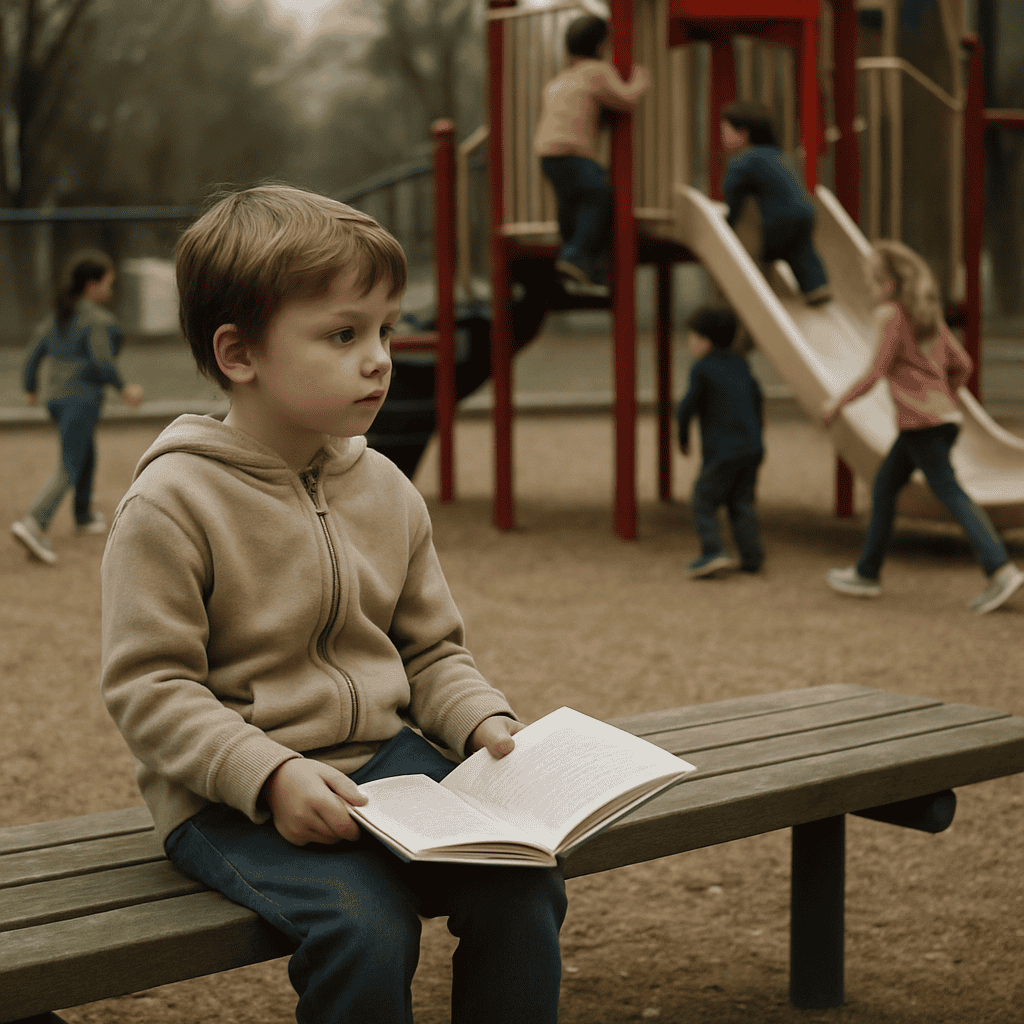
Gifted children often develop perfectionism not because they’re praised too much, but because early learning came effortlessly — and they internalized “smart” as an identity, not a behavior. When challenge finally arrives (usually around 3rd-5th grade, when curriculum deepens), the gap between their self-concept and their performance feels existential. If being smart is who they are, then struggle means they were never smart at all.
This is the root of gifted underachievement: refusal to try becomes a defense mechanism. A 10-year-old who won’t turn in homework isn’t lazy — they’re protecting their identity. Not trying means they can preserve the story that they could do it if they wanted to. Trying and failing shatters the story. So they freeze, procrastinate, produce work far below their capability, or melt down entirely. Parents see a kid who “could do it if they just applied themselves.” The child sees an impossible choice: risk exposure or stay safe in potential.
The CHOC guide to child development milestones emphasizes that developmental readiness varies widely even in typical populations. For gifted children, the variance is more extreme. A child might grasp abstract algebraic concepts but lack the executive function to track a multi-step project or the frustration tolerance to revise a draft. The work feels “easy” intellectually and impossible practically. Breaking the perfectionism trap requires decoupling identity from performance, normalizing failure as information, and teaching the child that struggle is the mechanism of growth, not evidence of inadequacy.
Social Challenges: When You’re Out of Sync with Everyone
Gifted children are developmentally out of sync with their same-age peers in ways that make social connection complicated. A 7-year-old who wants to discuss Greek mythology or debate climate policy doesn’t find conversational traction on the playground, where peers are trading Pokémon cards and playing tag. Intellectually, the gifted child connects with 10- or 11-year-olds. But emotionally and physically, they’re still 7 — they cry when left out, need help regulating conflict, want to roughhouse and be silly.
The result is social isolation or code-switching. Many gifted children learn to “dumb down” their vocabulary, hide their interests, or stay quiet to fit in. Others gravitate toward adults, where conversation matches their cognitive level but the power dynamic makes true friendship impossible. Some find their people in interest-based communities — robotics clubs, writing groups, online forums for niche hobbies — where shared passion matters more than chronological age. But in the day-to-day environment of school and neighborhood, they often feel lonely even in a crowd.
Parents can help by validating the loneliness without pathologizing it, seeking out interest-based peer groups, and teaching the child that friendship compatibility isn’t about being “the smartest” but about shared curiosity, humor, and values. For insights on navigating peer challenges, see our article on what to do when your child has no friends. Gifted children also benefit from explicit social skills coaching — they often miss the implicit cues other kids absorb naturally, because their cognitive processing is busy elsewhere.
How to Support Gifted Children Without Burning Out
Supporting gifted children requires rejecting the “pipeline” model — the idea that giftedness is a straight track to high achievement — and embracing what researchers call “talent development,” which recognizes that potential needs scaffolding, challenge, relationship, and rest to mature. The CDC child development hub offers foundational guidance on meeting kids where they are, which for gifted children means meeting them in multiple places at once.
First, stop treating asynchronous development as a problem to fix. Your 8-year-old can read Tolkien and still need help managing frustration when their Lego build collapses. Both are true. Offer cognitive challenge and emotional scaffolding simultaneously. Let them read complex books and also have meltdowns. Don’t say, “You’re too smart to act like this.” Say, “I see you’re frustrated. Let’s take a break and try again.”
Second, prioritize mastery over enrichment. Gifted children don’t need more — they need deeper. A child obsessed with space doesn’t need a surface-level astronomy kit; they need a telescope, a subscription to Sky & Telescope, and a mentor who can answer questions for an hour. Depth in an area of passion builds resilience, patience, and the experience of productive struggle. Breadth without depth reinforces the idea that learning should always be easy and fast.
Third, teach emotional literacy explicitly. Gifted children need language for what they feel and frameworks for managing intensity. Name the patterns: “That’s existential worry — lots of deep thinkers feel it. Let’s talk about what helps.” Introduce tools like journaling, drawing feelings, body-based regulation (deep breathing, movement), and cognitive reframes. If emotional intensity crosses into anxiety or depression, bring in a therapist familiar with gifted populations — regular CBT protocols often miss the cognitive complexity these kids bring. Our guide to recognizing anxiety in kids versus normal worry can help you assess when outside support is needed.
Finally, protect unstructured time. Gifted children are often over-scheduled in an attempt to “feed” their abilities. But downtime — boredom, free play, daydreaming — is where creativity and self-regulation develop. Let them be kids, even smart ones.
Frequently Asked Questions

Lena Carter is a contributing writer for The Daily Well, focusing on practical routines, family systems, and everyday strategies for modern households. With experience managing the demands of a busy home and balancing the realities of modern family life, her work centers on simple, sustainable approaches that reduce stress and create more stability in the day-to-day.
Her writing explores parenting routines, household organization, emotional overwhelm, and the small systems that help families function more smoothly in real life — not just in theory.



