
After-school routine charts function best when they’re designed as transition systems rather than compliance tools. Most families mistake the afternoon for a miniature workday—rushing from school pickup straight into homework and chores—when children actually need structured decompression before they can engage productively.
This distinction transforms how we approach the after-school window entirely. The goal isn’t to maximize output in the three hours between dismissal and dinner. It’s to create a predictable sequence that regulates energy, reduces friction, and builds autonomy without constant parental supervision. That’s where thoughtful family routines become infrastructure rather than wishful thinking.
Why Most After-School Routine Charts Fail
The typical after school routine chart lists tasks: hang up backpack, complete homework, practice instrument, do chores. It treats children like small project managers who simply need better to-do lists. But afternoon chaos rarely stems from unclear expectations. It emerges from dysregulated nervous systems colliding with rigid demands.
After six to seven hours of institutional structure, most children arrive home cognitively depleted and emotionally raw. According to the American Academy of Pediatrics, school-age children experience genuine mental fatigue that requires recovery time, not immediate task engagement. When we skip the transition phase and jump straight to productivity, we’re building systems on unstable ground.
The friction points reveal the pattern. Emotional meltdowns at 3:45 PM aren’t defiance—they’re depletion. Snack chaos happens because hunger meets decision fatigue. Homework resistance intensifies when we demand focus from an empty tank. Sibling conflicts spike when multiple dysregulated children occupy the same space without structure. Screen-time fights erupt because children gravitate toward the lowest-effort dopamine source available.
These aren’t character issues. They’re predictable systems failures that require better design, not stricter enforcement.
The After-School Transition Chart Framework
Effective after school routine charts follow a five-phase sequence: Arrive, Refuel, Reset, Responsibility, and Recharge. Each phase serves a specific regulatory function and shouldn’t be skipped or rushed.
Arrive (5-10 minutes)
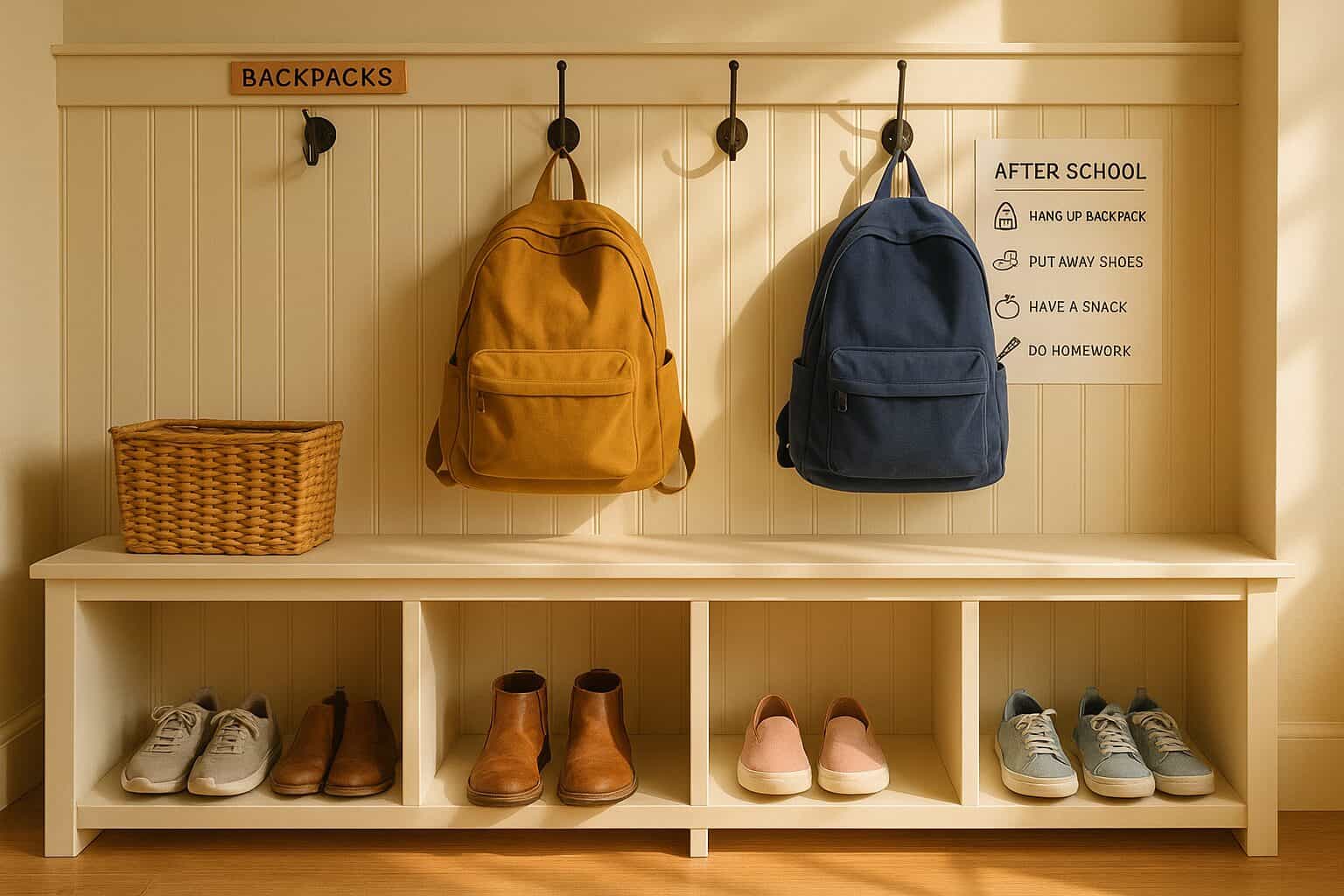
This phase handles the physical transition from school to home. Kids need a designated space—a backpack launch zone by the door or mudroom—where belongings have specific homes. The morning routine that worked for departure should mirror this arrival sequence.
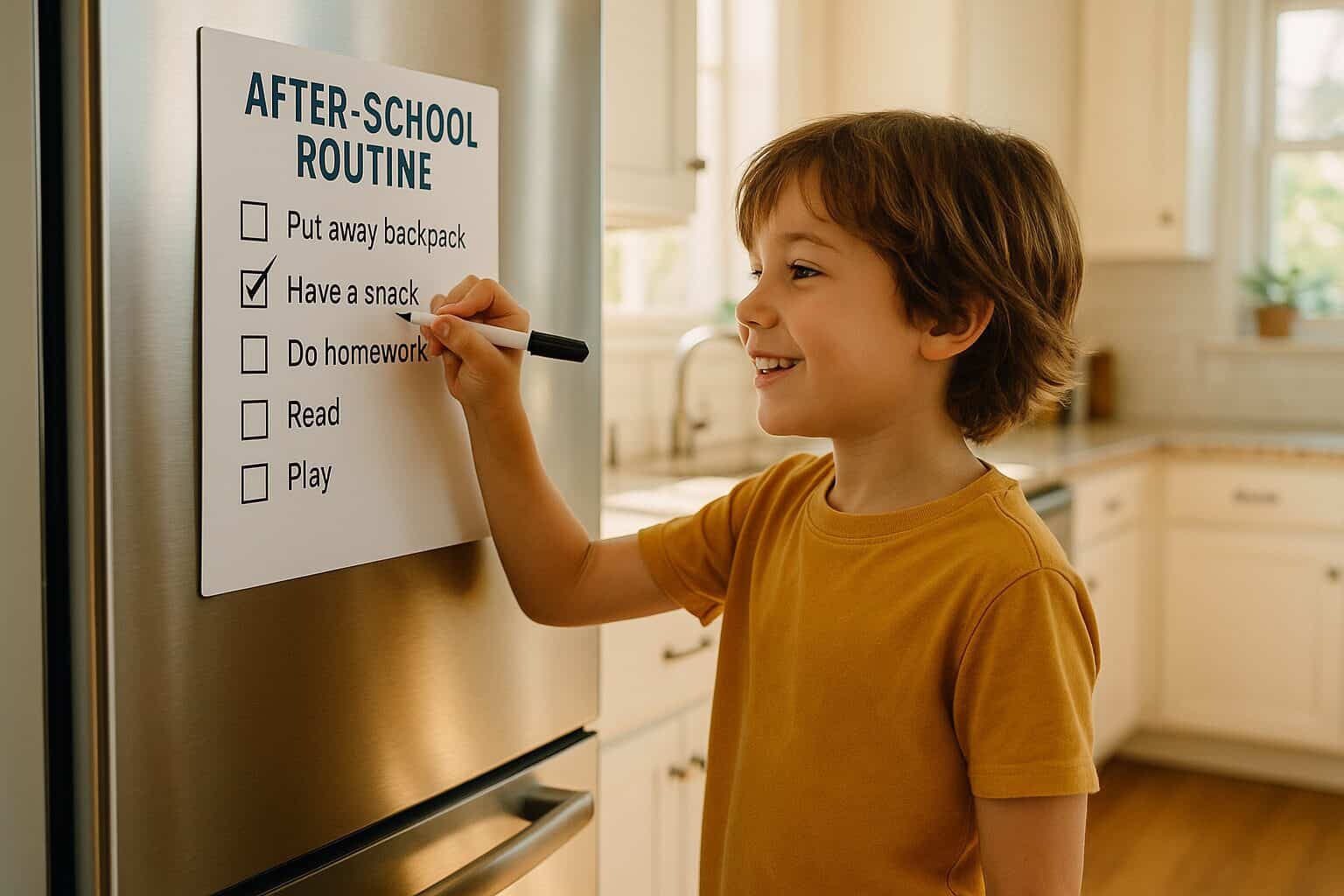
Visual cues matter here. For younger elementary students, photo-based visual systems showing the backpack hook, the lunchbox counter, and the shoe bin eliminate decision points. Older elementary children can manage a simple after school checklist for kids mounted on the fridge: backpack emptied, lunch items to kitchen, permission slips to parent station, tomorrow’s folder prepped.
Refuel (15-20 minutes)
Hunger and thirst aren’t optional considerations—they’re physiological needs that directly impact behavior and cognition. This phase requires actual systems, not just permission to grab something from the pantry. Designated healthy snack systems with pre-portioned options eliminate negotiation and decision fatigue for both parent and child.
The homework routine chart can’t begin until blood sugar stabilizes. Children who eat consistent afternoon snacks demonstrate better emotional regulation and cognitive performance than those who don’t, according to developmental research from the American Psychological Association.
Reset (15-30 minutes)
This is the counterintuitive phase most families skip entirely. Children need genuine downtime—not as a reward for completing tasks, but as a prerequisite for being able to complete them. The reset period allows for unstructured play, outdoor time, reading, quiet activities, or yes, even limited screen time if that’s your family’s calibrated choice.
For younger elementary children (grades K-2), this phase should be longer and less structured. They’ve held it together all day and need to truly decompress. Older elementary students (grades 3-5) can handle shorter reset windows but still require them. Middle schoolers often need physical movement—shooting baskets, walking the dog, stretching—more than sedentary rest.
The after school schedule for kids should protect this window rather than treat it as wasted time. You’re not losing productivity. You’re building the foundation that makes productivity possible.
Responsibility (45-90 minutes)
Now the traditional homework routine chart and chore expectations can function effectively. Children who’ve moved through the earlier phases arrive at this point regulated, fed, and genuinely capable of focus.
Structure this phase with clear start and end times rather than open-ended duration. “Homework time is 4:30 to 5:30” works better than “finish your homework before dinner.” For households managing sports schedules, this window may need to split: 30 minutes before practice, remainder after dinner.
The homework routine itself functions as a nested system within this larger structure. Visual timers, body-doubling (parent working nearby), and fidget tools all support focus without requiring constant intervention.
Recharge (Until bedtime)
The final phase transitions toward evening—dinner, family time, and the progression toward the bedtime routine. The after-school system officially ends here, handing off to evening structure.
After-School Transition Chart vs. Traditional Tools
Routine Chart: Full sequence covering emotional regulation, physical needs, and task completion across multiple phases.
Homework Checklist: Task-specific tool focused only on academic work; functions as a subset within the responsibility phase.
Chore Chart: Responsibility tracking without addressing the transition needs that make chore completion realistic.
Visual Transition System: Icon- or photo-based sequence designed for pre-readers or children who process visual information more effectively than text lists.
Building Your After-School Routine Charts: Physical Implementation
The best printable after school routine lives where your family actually sees it. Digital apps fail because phones aren’t visible in the relevant moments. The system needs to be ambient—present without requiring active retrieval.
For families with younger children, magnetic boards on the refrigerator with movable picture icons create engagement and ownership. Kids physically move their marker through the sequence, which reinforces the progression. Dry-erase boards work for older elementary students who can read and benefit from checking off completed phases.
The backpack launch zone becomes the physical anchor. Everything flows from that entry point. One family I know uses a three-bin system: “Put Away Now” (lunch items, school notices), “Tomorrow Needs” (homework folder, signed forms), and “Weekly Sort” (graded papers, artwork). The bins themselves become the visual system.
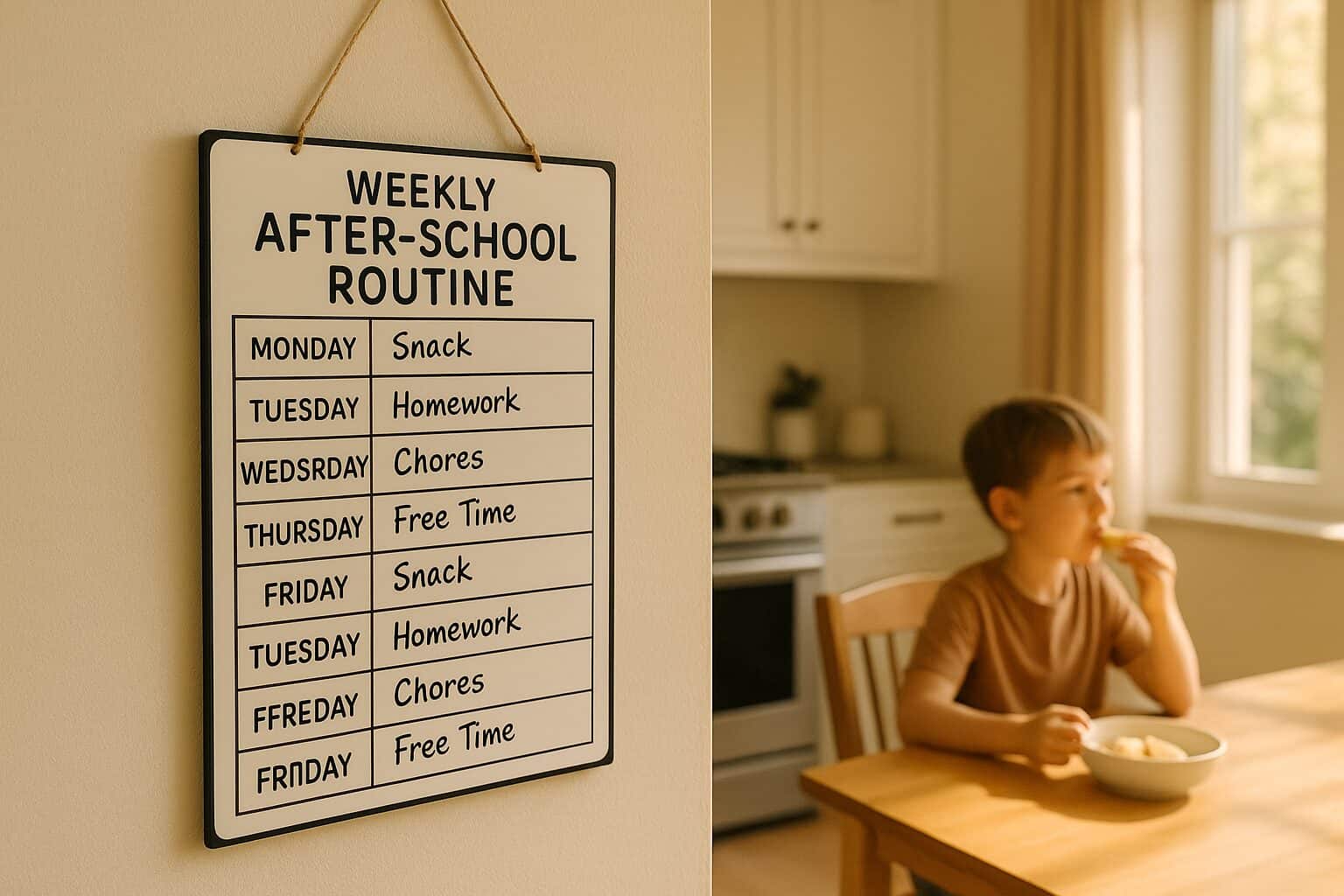
Laminated printable routine charts mounted at child eye-level near the entry point, snack station, and homework zone create consistent visual reference without requiring memory retrieval.
Age-Specific After-School Routine Adaptations
Younger elementary students (K-2) need more visual cues, longer reset phases, and shorter responsibility windows. Their charts should use images more than words. The entire sequence might take 2.5 hours, with homework expectations limited to 20-30 minutes maximum.
Older elementary children (3-5) can manage more text-based systems and longer focus periods, but they still need the full transition sequence. Skipping phases just because they’re more capable creates the same dysregulation, just with more sophisticated resistance strategies.
Middle schoolers need the system to feel less visible and more autonomous. The structure remains, but the implementation shifts toward time blocks rather than picture charts. They benefit from input in designing their own sequence, even if the five phases stay consistent.
Troubleshooting Common After-School Routine Chart Failures
When the system breaks down, the failure point usually reveals the design flaw. If meltdowns happen during homework, the reset phase was probably too short. If kids are sneaking screens during responsibility time, they likely didn’t get adequate recharge earlier. If siblings fight constantly, they may need separate reset spaces.
Sports schedules create legitimate complications. The framework doesn’t change—children still need to arrive, refuel, reset, handle responsibilities, and recharge—but the timing compresses or splits. Quick car snacks become the refuel phase. Reset time might shift to post-practice. The homework window may move to after dinner, which means protecting focus time when everyone’s tired.
Screen-time fights often indicate that the recharge phase lacks clear boundaries. Implementing thoughtful screen-time guidelines as part of the overall routine reduces negotiation. When screen time has a defined window rather than being a background battle, it stops consuming cognitive space.
Implementing After-School Routine Charts as Family Systems
The most sustainable after school routine ideas emerge from treating the chart as shared infrastructure rather than child-specific compliance tracking. Parents need their own versions of these phases—we also arrive home depleted, require refueling, and benefit from reset time before tackling dinner preparation and homework support.
When families adopt this framework together, the system reinforces itself. Everyone understands why we’re not starting homework at 3:30 PM. The structure explains itself through experience rather than requiring constant enforcement.
Start with one week of observation before implementing any chart. Note the actual friction points in your specific household. Then design the visual system to address those specific breakdowns rather than installing a generic template. The chart should solve your family’s actual problems, not theoretical ones.
If you’ve struggled with why family routines fail in other contexts, the after-school window offers a contained testing ground. It’s short enough to iterate quickly but impactful enough that improvements create noticeable relief.
The goal isn’t perfect compliance with an elaborate chart. It’s designing a system that works with human neurobiology rather than against it—creating structure that reduces friction instead of adding another thing for everyone to manage.
Frequently Asked Questions

The Daily Well Team creates practical, research-backed content focused on modern parenting advice, wellness tips for moms, and everyday strategies for real families. We cover routines, child development, family systems, and smart lifestyle solutions that help busy households reduce stress and function more effectively. Our editorial approach is grounded in clarity, simplicity, and real-world results.



