
You might not notice it happening at first. Your jeans still fit, your weight hasn’t changed, and you’re still carrying the groceries inside in one trip. But by your mid-30s, something subtle (and sneaky) starts to shift: your muscle mass begins to shrink.
It’s called sarcopenia—a fancy name for age-related muscle loss. And while it sounds like something that only affects gym rats or seniors, the truth is, it kicks in much earlier than most people realize.
What Is Sarcopenia—and Why Should You Care?
Sarcopenia typically starts around age 35 and progresses slowly at first—about 1–2% loss of muscle mass per year. After 60, that rate can increase to 3% or more. That might not sound like much, but over time, it adds up. By the time you’re in your 70s or 80s, you could have lost up to 30–50% of your muscle strength if you haven’t taken steps to stop it.
And this isn’t just about vanity or flexing in the mirror. Losing muscle impacts everything: balance, metabolism, mobility, and even how easily you recover from illness or injury.
According to the National Institutes of Health, reduced muscle mass is linked to greater risk of falls, frailty, and loss of independence in older adults. (NIH)
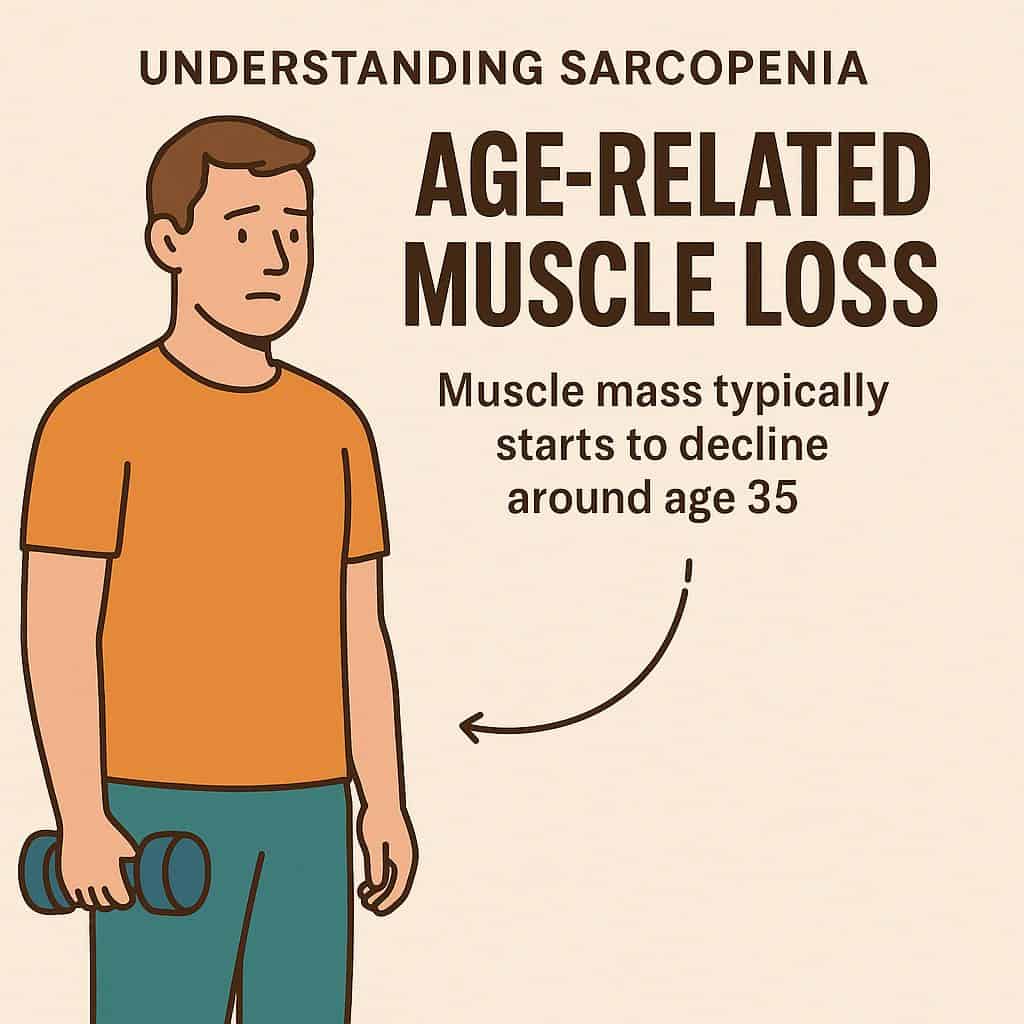
Why It Happens—Even If You’re Still Active
Muscle maintenance is a “use it or lose it” situation. After 35, your body produces less testosterone, estrogen, and growth hormone—all of which help keep muscles strong. Your cells also become less efficient at rebuilding muscle tissue. And if you’re not eating enough protein or getting resistance exercise? The losses pile up even faster. Think of it as compound interest, but in a bad way.
This doesn’t mean you’re doomed to get weaker every year. But it does mean you’ll need to be more intentional to keep what you’ve got—and maybe even gain some back.
How to Fight Muscle Loss (No Extreme Gym Routines Required)
Lift Something. Anything.
Resistance training is the gold standard for preserving muscle, and no, you don’t need to live at the gym or bench press a Honda Civic. Bodyweight exercises like squats, push-ups, and planks count. So do resistance bands, dumbbells, or even carrying heavy grocery bags. Aim for strength training at least 2–3 times a week.
The Centers for Disease Control and Prevention (CDC) recommends resistance training for all adults over 50 to improve strength, reduce falls, and support independence. (CDC)
Eat Protein Like You Mean It
Muscle isn’t just built in the gym—it’s built in the kitchen. After 40, your body becomes less efficient at using dietary protein to build muscle, so you’ll need more of it. Experts suggest aiming for 25–30 grams of protein per meal.
Good sources include lean meats, eggs, Greek yogurt, beans, and nuts. And if you’re plant-based? It’s totally doable—just be sure to mix protein sources to get all your essential amino acids.
Don’t Skimp on Sleep or Vitamin D
Muscles recover and rebuild during rest. Poor sleep messes with hormone levels and slows down that process. Meanwhile, vitamin D plays a big role in muscle strength—and many adults, especially those over 50, don’t get enough. Ask your doctor to check your levels or consider a supplement if needed.

Stay on Your Feet
Even outside the gym, daily movement matters. Walking, dancing, gardening, or even chasing after a dog or grandkid helps keep your muscles engaged. Sedentary lifestyles accelerate sarcopenia faster than you can say “Netflix marathon.”
Don’t Be Fooled by the Scale
Here’s the tricky part: You can be losing muscle and gaining fat, and the number on the scale stays the same. That’s why strength training and regular activity are key—they maintain lean mass, not just your weight. Remember–muscle weighs more than fat, so don’t be fooled by the scale!
Functional fitness—being strong enough to do everyday things—is far more important than what size you wear. And the good news? It’s never too late to start. Even people in their 80s and 90s can build muscle with the right plan.
Final Word: Strong Is the New Young
You can’t stop the clock, but you can slow down muscle loss and feel stronger, longer. All it takes is a little movement, smart eating, and a commitment to your future self. Because staying strong isn’t about looking good in a tank top—it’s about living independently, confidently, and pain-free for years to come.
So whether you’re 38 or 68, it’s not too late to reclaim your strength. Your muscles are ready when you are.

Lena Carter is a contributing writer for The Daily Well, focusing on practical routines, family systems, and everyday strategies for modern households. With experience managing the demands of a busy home and balancing the realities of modern family life, her work centers on simple, sustainable approaches that reduce stress and create more stability in the day-to-day.
Her writing explores parenting routines, household organization, emotional overwhelm, and the small systems that help families function more smoothly in real life — not just in theory.

