Raising bilingual children isn’t just a trend—it’s one of the greatest gifts a parent can give. Beyond the charm of speaking two languages, bilingualism builds stronger brains, deeper empathy, and opens doors to a multicultural world. But how can parents nurture this skill without turning their home into a language bootcamp? It’s easier—and more fun—than you might think.
Let’s explore the big benefits and practical, everyday tips to raise bilingual kids with confidence.
Why Bilingual Kids Have the Edge
1. Brainpower That Shines
Bilingual children tend to have sharper executive functioning—skills that include problem-solving, memory, and attention switching. According to the American Academy of Pediatrics, learning and managing two languages builds stronger connections between brain regions, especially those responsible for decision-making and self-control (HealthyChildren.org).
2. Academic Benefits that Last
Kids who speak two languages often do better in school, particularly in reading and math. Research from the National Institute of Child Health and Human Development found that bilingual children show more advanced problem-solving and verbal reasoning skills, which translate to higher academic achievement over time (nih.gov).
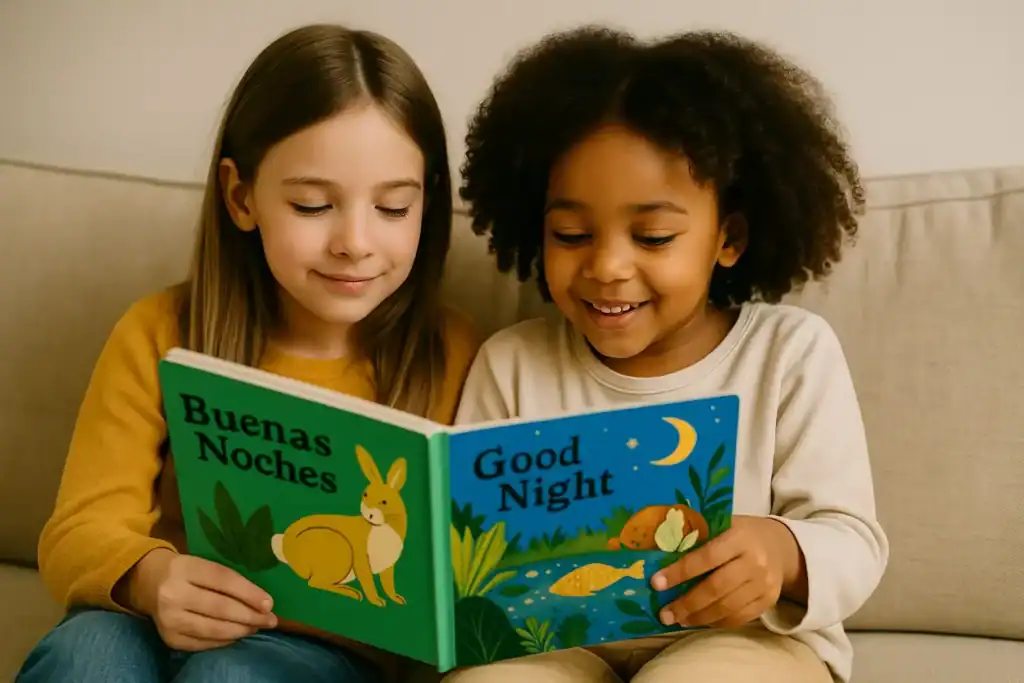
3. Emotional and Cultural Intelligence
Learning a second language strengthens emotional bonds—especially with family members who speak a heritage language—and fosters respect for other cultures. The Linguistic Society of America points out that bilingualism helps children build identity and empathy, giving them social advantages in diverse environments (LinguisticSociety.org).
How to Get Kids Loving a Second Language
Start Early—but Don’t Worry If It’s Later
Yes, babies absorb language like sponges. But if your child’s already in school, don’t stress. It’s never too late to introduce a second language. What matters most is consistency and exposure.
Make Language Learning a Game
Children learn best through play. Try singalongs, cartoons, memory games, or apps like Gus on the Go, or Duolingo Kids. You can also label household items in both languages, or create simple scavenger hunts using vocabulary words. Keep it joyful and pressure-free.
Use the Language at Home
If one parent is fluent, the “one parent, one language” approach can help kids associate each language naturally. If neither parent is fluent, learn together—it’s a bonding opportunity and shows your child that language learning is a lifelong skill.
Find a Community
Social interaction reinforces language in meaningful ways. Look for local bilingual playgroups or online meetups. Having friends who speak the same language boosts motivation and creates a sense of belonging.
Celebrate Small Wins
Language learning isn’t always linear. Your child may mix languages or go through phases of silence. That’s okay! Celebrate milestones—no matter how small—and stay positive. Your encouragement builds their confidence.
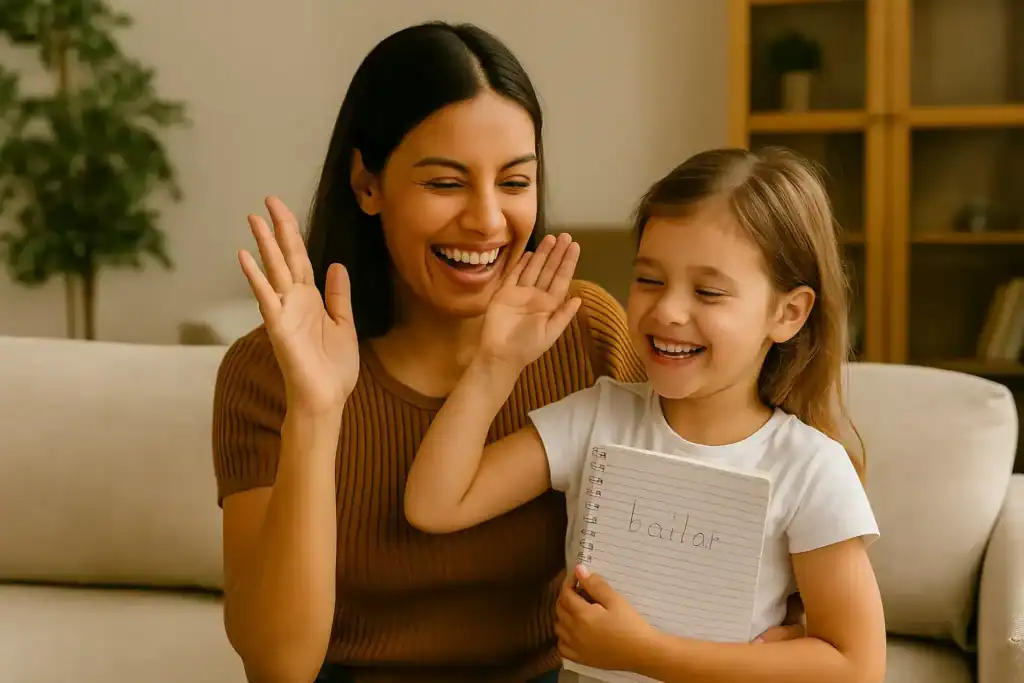
Use Media as a Tool
Watch shows and read books in the target language. If your child has a favorite story or movie, find the version in Spanish, French, Mandarin, or whichever language you’re working on. Repetition with familiar content builds vocabulary and fluency.
Enroll in Language Programs or Plan a Trip
Bilingual preschools, immersion programs, and summer camps can accelerate learning. And if travel is an option, visiting a country where the language is spoken gives your child invaluable, real-world practice.
It’s a Lifelong Gift, Not Just a School Subject
Teaching your child a second language isn’t about perfection—it’s about connection. It’s about giving them the tools to thrive in a global world, to think differently, and to feel at home wherever they go. You’re not just raising a bilingual child. You’re raising a citizen of the world.

Lena Carter is a contributing writer for The Daily Well, focusing on practical routines, family systems, and everyday strategies for modern households. With experience managing the demands of a busy home and balancing the realities of modern family life, her work centers on simple, sustainable approaches that reduce stress and create more stability in the day-to-day.
Her writing explores parenting routines, household organization, emotional overwhelm, and the small systems that help families function more smoothly in real life — not just in theory.



